Last Updated on: June 19, 2025

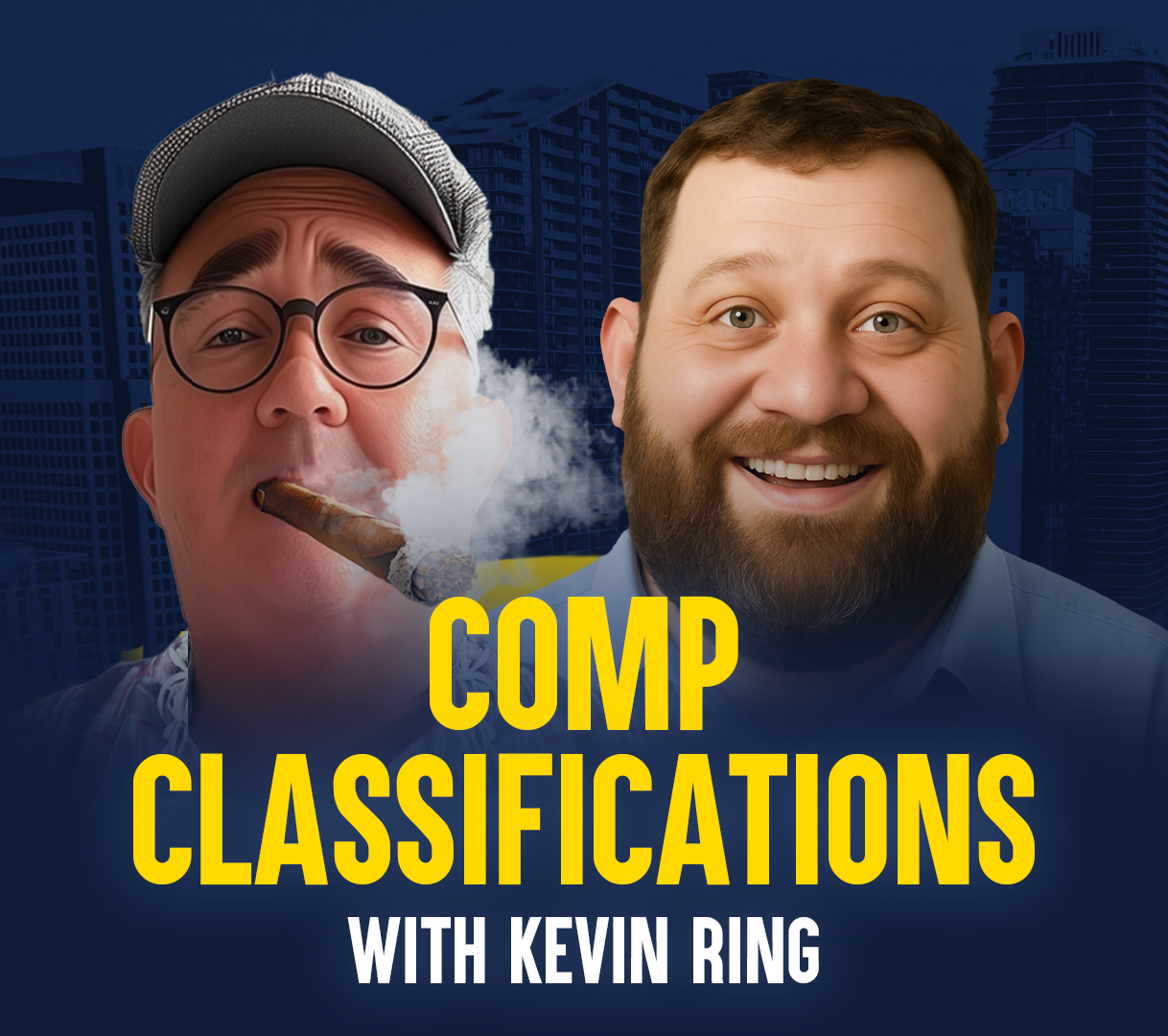
Comp Classifications with Kevin Ring, Shoptalk Episode #181

Comp Classifications with Kevin Ring
Facebook
Twitter
LinkedIn

In this Power Producers Podcast episode, David Carothers is joined by Kevin Ring, lead analyst at the Institute of Work Comp Professionals, for a deep dive into workers’ compensation classifications. The discussion focuses on the challenges of ensuring that businesses are properly classified, the importance of getting class codes right, and strategies to avoid common mistakes that could lead to costly audits. With firsthand experience from multiple NCCI audits, David shares his insights on how to navigate the complexities of workers’ comp class codes and protect clients from unnecessary errors.

Kevin also covers the most recent changes in the industry, such as NCCI’s update to code 8720 for construction estimators, and explains how businesses need to stay updated on classification changes to avoid issues down the line. This episode is packed with practical advice for agents looking to stay ahead in the workers’ comp space.

Key Highlights:

The Importance of Classifications

David and Kevin discuss why workers’ compensation class codes are crucial and how an incorrect classification can result in higher premiums and audits. They emphasize the importance of understanding both the business operations and how they should be classified.

Navigating NCCI Audits

David shares his experience with NCCI audits, including the thorough process involved and how misunderstandings about class codes can lead to disputes. He explains why getting the right people involved upfront can prevent these issues.

Changes in Workers’ Comp Classifications

Kevin discusses recent changes to class codes, including the addition of construction estimators to code 8720 and the merging of long-haul and short-haul trucking codes. He explains how these changes can impact businesses and how agents need to stay on top of these adjustments.

Understanding Standard Exception Classifications

Kevin explains standard exception classifications (like clerical, outside sales, and drivers) and how they can be applied separately from the governing class code. He also touches on the importance of understanding each code’s detailed criteria to ensure accuracy.

Classifying Businesses in Construction and Manufacturing

Kevin dives into the complexity of classifying businesses in industries like construction and manufacturing, where different activities within the same business can require separate codes. He provides examples of how to apply the right codes depending on the work performed.

The Role of Agents in Accurate Classifications

David and Kevin discuss the role of insurance agents in accurately classifying businesses and ensuring that clients’ operations align with the right class codes. They highlight how thorough knowledge and documentation can prevent issues during audits and save clients money.

Connect with:

Visit Websites:

The Power Producers Podcast where we are refining and redefining the sales game.

Kyle Houck

Producers

Parametric Insurance Explained: How Middle Market Producers Can Hedge Economic Loss, Protect Revenue, and Differentiate at the Point of Sale

The commercial insurance industry is in the middle of a quiet evolution.

While most conversations still revolve around premiums, deductibles, limits, and carrier appetite, a different category of risk transfer has been gaining traction beneath the surface—parametric insurance. It is not new, but it is finally becoming accessible, relevant, and actionable for middle market producers who are willing to think differently about risk.

In a recent episode of the Power Producers Podcast, I sat down with Brian Thompson from Descartes Underwriting to unpack what parametric insurance actually is, what it is not, and why producers who ignore it may be leaving their clients—and themselves—exposed.

This article breaks that conversation down into practical, producer-friendly language and shows how parametric insurance fits into modern middle market risk management.

Read More »

From Bottleneck to Builder: Why Systems, Culture, and Accountability Define Real Business Growth

For most entrepreneurs, the decision to start a business is rooted in the promise of freedom. Freedom from a boss, freedom to control income, and freedom to build something meaningful. Yet for many business owners, particularly in service-based industries and middle-market companies, that freedom slowly erodes. What begins as ownership eventually turns into obligation, where the business demands constant attention and the owner becomes the single point of failure.

Read More »
Cyber

Why Standalone Cyber Insurance Beats BOP Extensions Every Time: Protecting Clients from Modern Threats

The insurance industry is full of shortcuts. Some producers look for ways to streamline the quoting process, others avoid hard conversations with clients, and many rely on endorsements or extensions because they are “easier” than diving into the details. Nowhere is this more dangerous than in the world of cyber insurance.
Too many agents assume that a cyber endorsement on a BOP or commercial package policy is “good enough.” It isn’t. In fact, treating a BOP cyber extension as a replacement for a standalone cyber policy leaves clients dangerously exposed, puts producers at risk of losing accounts, and opens the door to costly errors and omissions (E&O) claims.
Cyber threats evolve faster than any other area of risk, and endorsements simply can’t keep up. If producers want to protect their clients and themselves, it’s time to understand why standalone cyber insurance is non-negotiable.

Read More »

Cyber Insurance Risk Management: Why MFA, MDR, and BYOD Policies Can’t Wait for a Hard Market

The cyber insurance market has softened in recent years. Requirements that were once rigid — like mandatory multi-factor authentication (MFA) or endpoint detection and response (EDR) tools — have been relaxed by many carriers. But here’s the danger: just because carriers aren’t demanding these safeguards today doesn’t mean businesses can afford to ignore them.

Read More »

Test Message

Killing Commercial Login