
Killing Commercial Login
Facebook
Twitter
LinkedIn
Podcast » Freedom From the Phones with GAIL, Episode #330
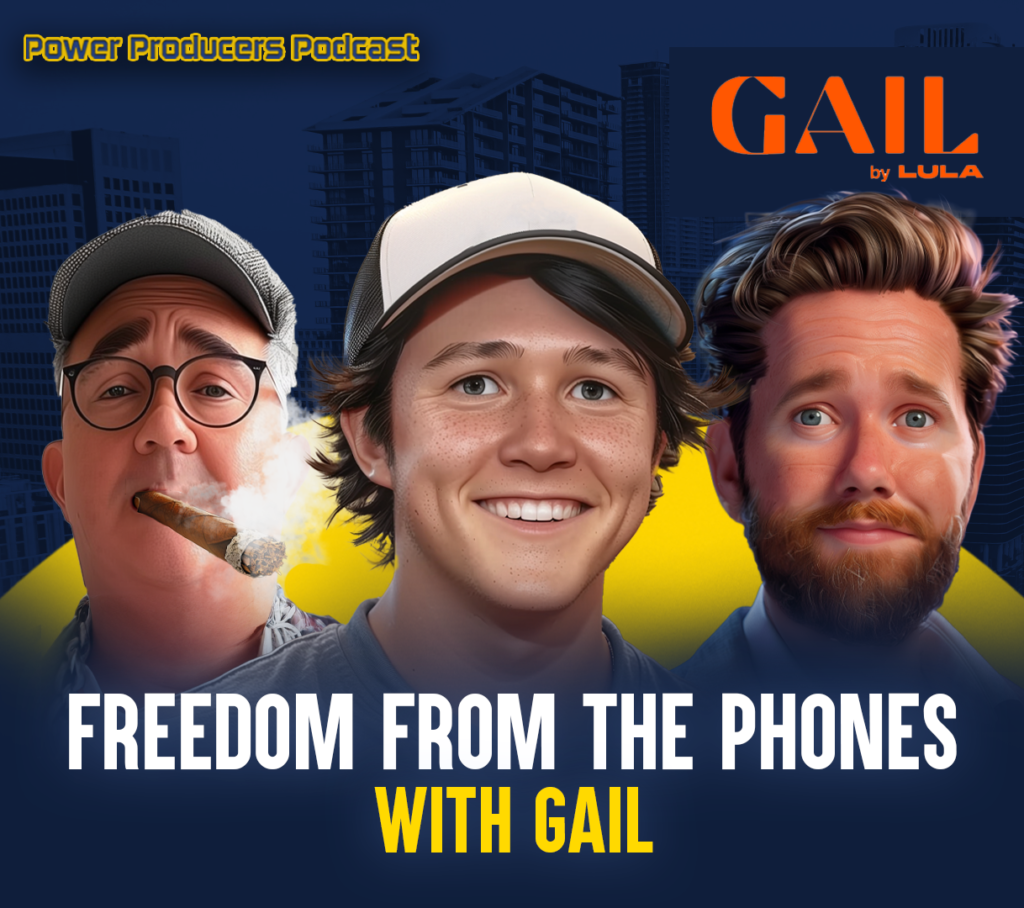
In this episode of the Power Producers Podcast, David Carothers and co-host Kyle Houck are joined by guest Roberto Salinas, the co-founder of GAIL. Roberto discussed the development and purpose of GAIL, a system designed to optimize insurance agencies’ phone operations, and the potential of AI in the industry. They emphasized the importance of using technology to improve efficiency and customer experience, highlighting the benefits of AI in capturing unrealized revenue and reducing costs. The speakers also talked about the potential of automated outreach for insurance sales and the need for proper training and understanding of AI technology. Additionally, they discussed the potential of AI-powered voice assistants in transforming the insurance industry, emphasizing their personalized and efficient service to customers.
Key Points:
AI-powered GAIL system for insurance phone calls: AI-powered GAIL system for insurance phone calls streamlines operations and addresses the issue of 60,000 missed calls, saving time and enabling focus on high ROI tasks. Kyle Houck highlights that GAIL allows decision-makers to concentrate on revenue-bearing activities, reducing administrative work and increasing efficiency.
Improving customer service with AI: Improving customer service with AI involves addressing the problem of 60,000 missed calls, increasing agency availability outside working hours, and replacing IVR menus while capturing inbound call information. Resistance to new technology among agents is discussed by David Carothers and Roberto Salinas, attributing it to a lack of understanding.
AI adoption in insurance industry: In AI adoption within the insurance industry, David Carothers asserts that AI will assist rather than replace agents, helping them focus on revenue-generating tasks. Agents’ skepticism and fear of AI are common, and tech companies struggle because they often aim to replace rather than enable independent agents. “GAIL” stands for generative AI by Lula, the parent company.
AI-powered virtual receptionist for call management: Using AI-powered virtual receptionist for call management involves various applications such as call triage, proactive outbound support, and potential voice cloning for famous voices like Morgan Freeman or Snoop Dogg for training. It also addresses issues like slow quoting and aims to improve customer support.
Automating insurance outreach and tasks: Automating insurance outreach and tasks includes campaigns for life and pet insurance opportunities, a script generator for the GAIL virtual assistant, and simplifying script editing to improve task creation, as noted by Kyle Houck.
AI adoption, cost vs. benefits, prompt engineering: AI adoption, cost vs. benefits, and prompt engineering are emphasized, highlighting the importance of correct AI usage, affordability, and reflecting on AI evolution and future trends.
Prioritizing customer obsession: Prioritizing customer obsession involves learning from Seth Godin’s “Permission Marketing” and emphasizes early adoption to fill industry needs while focusing on customer obsession.
Personalized voice clones for callers: Personalized voice clones for callers include the development of voice AI prioritizing legality and quality. Roberto Salinas’s direct approach led to gaining customers, along with a promotional offer available for podcast listeners. Frustration with overcharging for recordings is expressed, advising to prospect elsewhere.
Connect with:
Visit Websites: