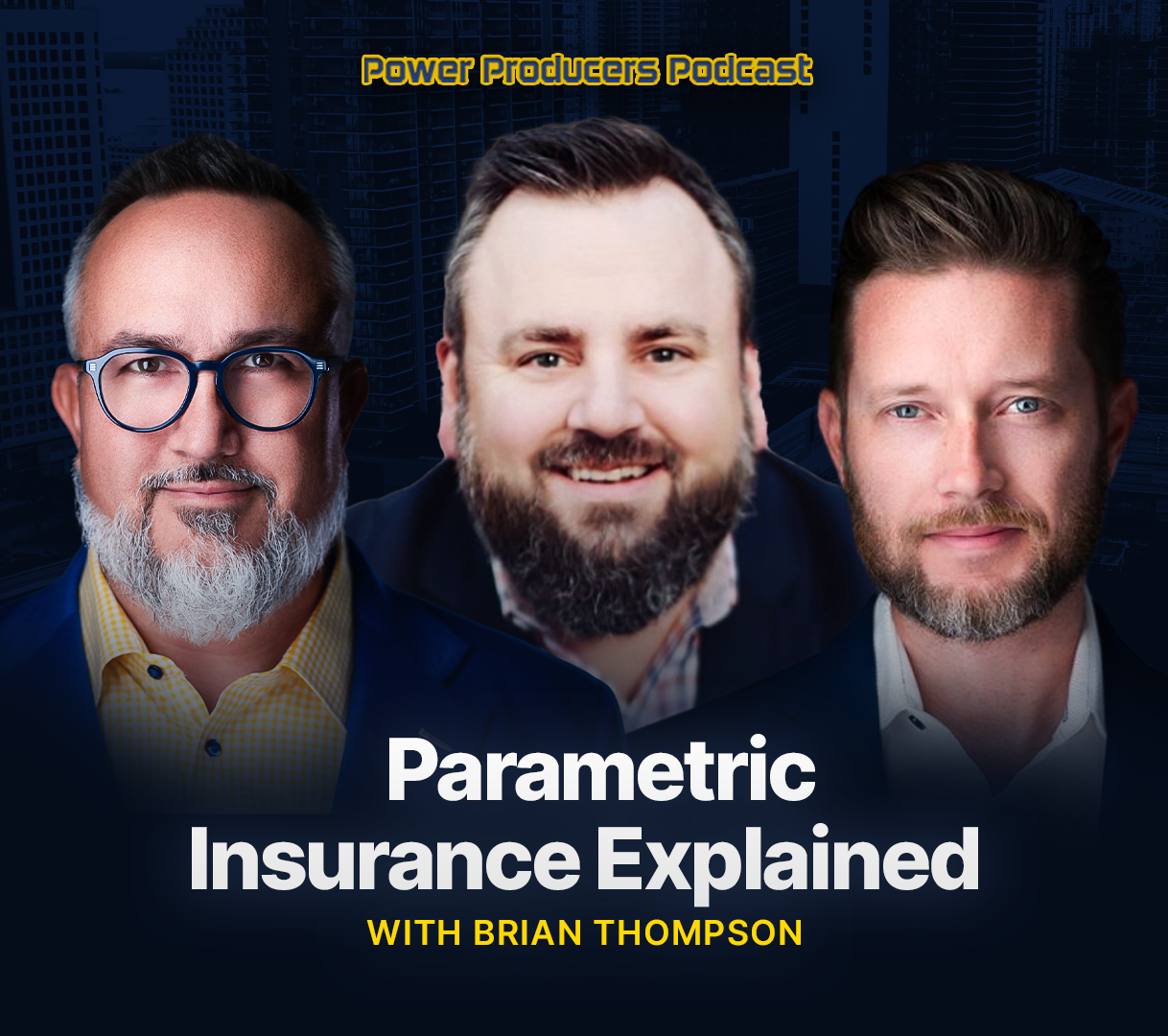
In this episode of Power Producers Podcast,
David Carothers sat down with
Brian Thompson from
Descartes Underwriting to break down parametric coverage and why it is becoming a serious differentiator for producers.
Brian explained parametric as a predefined payout tied to a predefined event, with payment triggered by the event and supported by a loss attestation. They explored how parametric can address gaps traditional insurance does not, especially economic loss, non damage business interruption, and revenue disruption tied to access and supply chain issues. David emphasized that producers do not need to be experts, but they do need to know parametric exists and ask better discovery questions to uncover risks that can be solved with these programs.
Key points:
Parametric 101 and How It Actually Works
Brian Thompson explains that parametric coverage is built around pre negotiated payouts for predefined events. Instead of adjusting the claim, coverage triggers based on the event, and the insured attests they suffered a loss. This structure can allow funds to arrive within days, helping clients recover faster and avoid long delays.
Economic Loss Matters More Than Physical Damage
A major takeaway is that parametric can cover full economic loss, not just physical damage. That includes revenue disruption after a storm, cancellations, loss of access, and increased operating costs. This is where many producers get stuck because they assume insurance only responds to visible property damage.
Real World Use Cases Beyond Property Insurance
They shared examples like a casino location in Macau where coverage was tied to access over a bridge, resulting in a fast payout after a typhoon closed access. Another example involved Mississippi River water levels impacting barge shipments, forcing higher costs through trucking and rail. These scenarios show how parametric can insure risks that usually fall outside standard policies.
How Pricing and Structuring Really Happens
David pushed for clarity on pricing, and
Brian explained that rate depends on frequency, severity, and what the client wants to retain versus transfer. The structuring process is iterative, often requiring several quote revisions. Back testing is a key advantage because teams can model how coverage would have performed during past events.
Why Generalists Will Struggle Going Forward
David reinforced that generalist producers will lose because they miss nuanced operational risks. Parametric requires deeper discovery to uncover what truly threatens profitability, liquidity, and continuity. Knowing how to ask the right questions helps producers create wedge opportunities and win accounts.
Education Resources and How Producers Can Get Started
Brian shared that education is a major part of adoption, and Dart runs webinars, publishes a newsletter, and provides case studies and examples. The most important step is sending a what if scenario and using real quotes to understand how the product behaves. Producers can lean on the carrier team as an in house expert until they build confidence.
Connect with:
Visit Websites: