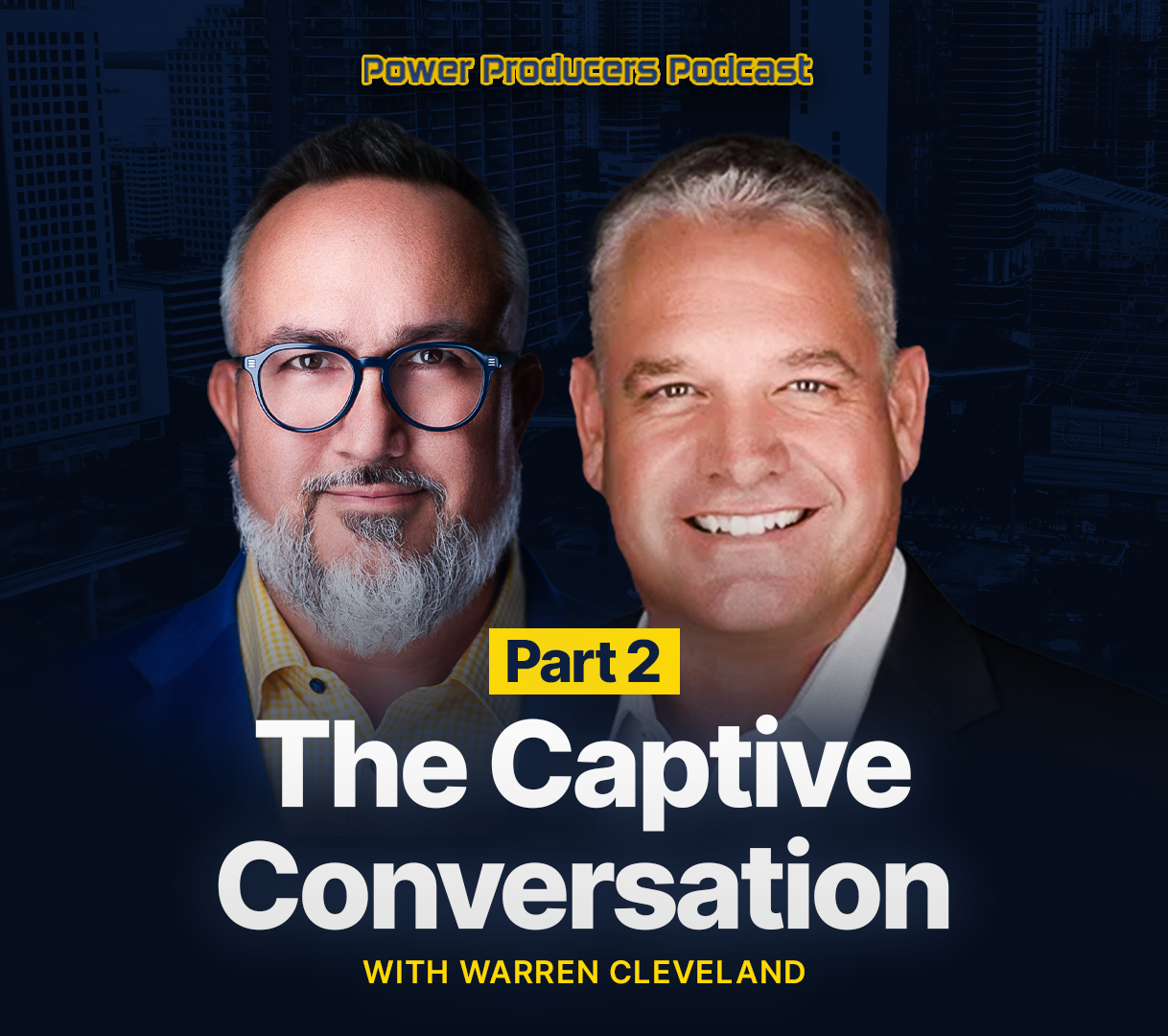
In this second episode of our four-part series on
Power Producers Shop Talk, host
David Carothers is joined again by
Warren Cleveland of
Captive Coalition. They dive deep into the three primary
mental roadblocks that prevent agents from successfully presenting
captive insurance solutions to their clients. The conversation quickly evolves into a powerful critique of flawed commission models, with
David making a compelling case for a fee-based
compensation structure that aligns an agent’s success directly with client savings. They break down common agent fears, provide tactical advice on educating clients, and explain why mastering these concepts is critical to retaining your best accounts.
Key Highlights:
Breaking Down the Three Mental Roadblocks
Warren Cleveland identifies the top fears agents have about
captives: not understanding how they work, the fear of losing control of the client relationship, and the excuse of not having time to learn.
David and
Warren dismantle each roadblock, arguing that these are mindset issues, not legitimate barriers, and that failing to overcome them is a direct path to losing your largest and most valuable clients.
The Compensation Conundrum: Commission vs. Fees
The discussion pivots to the fourth, unstated roadblock: fear of talking about
compensation.
David explains why the traditional commission model is broken—it often pays agents more when their clients perform worse. He outlines his strategy of using a transparent service fee with a gain-share option, which stabilizes producer income and proves immense value by tying increased pay directly to increased client savings.
A Strategic Path to Captives
The episode provides a clear roadmap for producers. Instead of jumping directly to a
captive, agents can gauge a client’s risk tolerance by introducing other loss-sensitive options first, such as a retro program. This approach helps educate the client, forces them to implement better controls, and creates a natural progression toward a
captive solution.
Mastering Core Insurance Mechanics
To be a true consultant, an agent must be able to explain how an insurance company makes money. Using a workers’ comp carrier’s 65% loss ratio as an example,
David demonstrates how this knowledge allows an agent to justify premium to clients with poor loss runs and, more importantly, highlight the profit they are giving away for those with excellent loss control.
Connect with:
Visit Websites: