Last Updated on: January 22, 2026

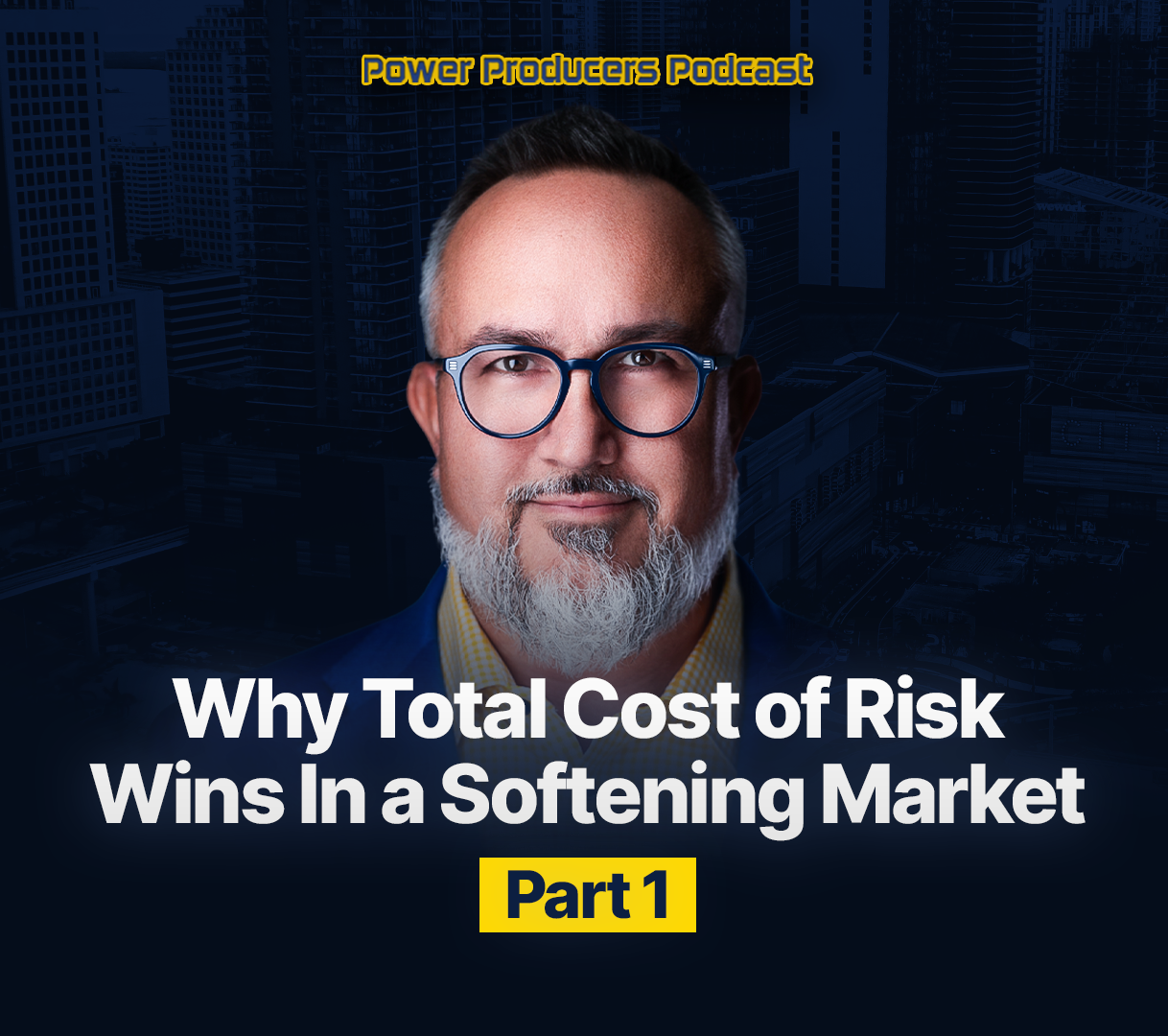
Why Total Cost of Risk Wins in a Softening Market – Part 1, Shoptalk #207

Why Total Cost of Risk Wins in a Softening Market - Part 1
Facebook
Twitter
LinkedIn

In this episode of Power Producer Shoptalk, host David Carothers kicks off the new year with a deep dive into the shifting dynamics of the reinsurance market and what producers need to do to prepare for a softening market. He emphasizes that the “bad news” hard market—where price shopping is rampant—is giving way to a “good news” soft market, where incumbents are harder to displace. David also outlines his aggressive goal to write $1 million in new business revenue in 2026, promising to “show, not tell” by documenting every step of the process. The core of this episode focuses on the Total Cost of Risk (TCOR) sales conversation: how to have it, why it works best in the $100k-$250k premium space, and why getting a Letter of Engagement before going to market is non-negotiable for serious producers.

Key Highlights:

The Shift from Hard to Soft Market

David discusses the recent reinsurance renewals and the early signs of a softening market. He warns producers that the strategies used during the hard market (competing on price when incumbents deliver bad news) will no longer work. In a soft market, incumbents deliver rate decreases, making it harder to get appointments. Now is the time to “sew your seeds” and pivot your messaging.

The “Show, Don’t Tell” 2026 Challenge

David announces his personal goal to write $1 million in new business revenue in 2026. He commits to documenting the entire journey—prospecting, meetings, and closing—in real-time, shifting his content focus back to the trenches of Florida Risk Partners to prove that his methods work in today’s environment.

Mastering the Total Cost of Risk (TCOR) Conversation

This episode is a masterclass on the TCOR sales process. David explains why he never goes to market without a signed Letter of Engagement on middle-market accounts. He breaks down the ideal premium sweet spot ($100k-$250k) where this conversation is most effective, noting that accounts in this range are often hearing about TCOR and broker selection for the first time.

Qualifying the Decision Maker

David shares a critical soft-skill tactic for identifying the true decision maker without offending your point of contact. Instead of bluntly asking “Are you the decision maker?”, he suggests asking: “Is there anyone else who is typically part of the decision-making process that we should include in our next meeting?” This question preserves relationships while ensuring you aren’t wasting time pitching to someone who can’t sign the check.

Stop “Quoting and Hoping”

The episode challenges the traditional “quote and hope” strategy of waiting 90 days out to shop a renewal. David argues that this method commoditizes the producer. Instead, he advocates for a consultative approach that secures the client’s commitment before doing the work, using a Letter of Engagement to validate the relationship and take control of the market.

Connect with:

Visit Websites:

The Power Producers Podcast where we are refining and redefining the sales game.

Kyle Houck

From Bottleneck to Builder: Why Systems, Culture, and Accountability Define Real Business Growth

For most entrepreneurs, the decision to start a business is rooted in the promise of freedom. Freedom from a boss, freedom to control income, and freedom to build something meaningful. Yet for many business owners, particularly in service-based industries and middle-market companies, that freedom slowly erodes. What begins as ownership eventually turns into obligation, where the business demands constant attention and the owner becomes the single point of failure.

Read More »
Cyber

Why Standalone Cyber Insurance Beats BOP Extensions Every Time: Protecting Clients from Modern Threats

The insurance industry is full of shortcuts. Some producers look for ways to streamline the quoting process, others avoid hard conversations with clients, and many rely on endorsements or extensions because they are “easier” than diving into the details. Nowhere is this more dangerous than in the world of cyber insurance.
Too many agents assume that a cyber endorsement on a BOP or commercial package policy is “good enough.” It isn’t. In fact, treating a BOP cyber extension as a replacement for a standalone cyber policy leaves clients dangerously exposed, puts producers at risk of losing accounts, and opens the door to costly errors and omissions (E&O) claims.
Cyber threats evolve faster than any other area of risk, and endorsements simply can’t keep up. If producers want to protect their clients and themselves, it’s time to understand why standalone cyber insurance is non-negotiable.

Read More »

Cyber Insurance Risk Management: Why MFA, MDR, and BYOD Policies Can’t Wait for a Hard Market

The cyber insurance market has softened in recent years. Requirements that were once rigid — like mandatory multi-factor authentication (MFA) or endpoint detection and response (EDR) tools — have been relaxed by many carriers. But here’s the danger: just because carriers aren’t demanding these safeguards today doesn’t mean businesses can afford to ignore them.

Read More »

AI, Authenticity, and the Future of Elite Production: What the Insurance Industry Must Learn from Craig Bender’s InsureU2 Revolution

The insurance industry is entering one of the most transformative seasons in its history. For decades, our world has been shaped by carriers, underwriting cycles, prospecting methods, and the grit of producers willing to outwork their competition. But today, a new force is reshaping the landscape—and most producers, agency leaders, and industry professionals aren’t ready for it.

Read More »

Test Message

Killing Commercial Login