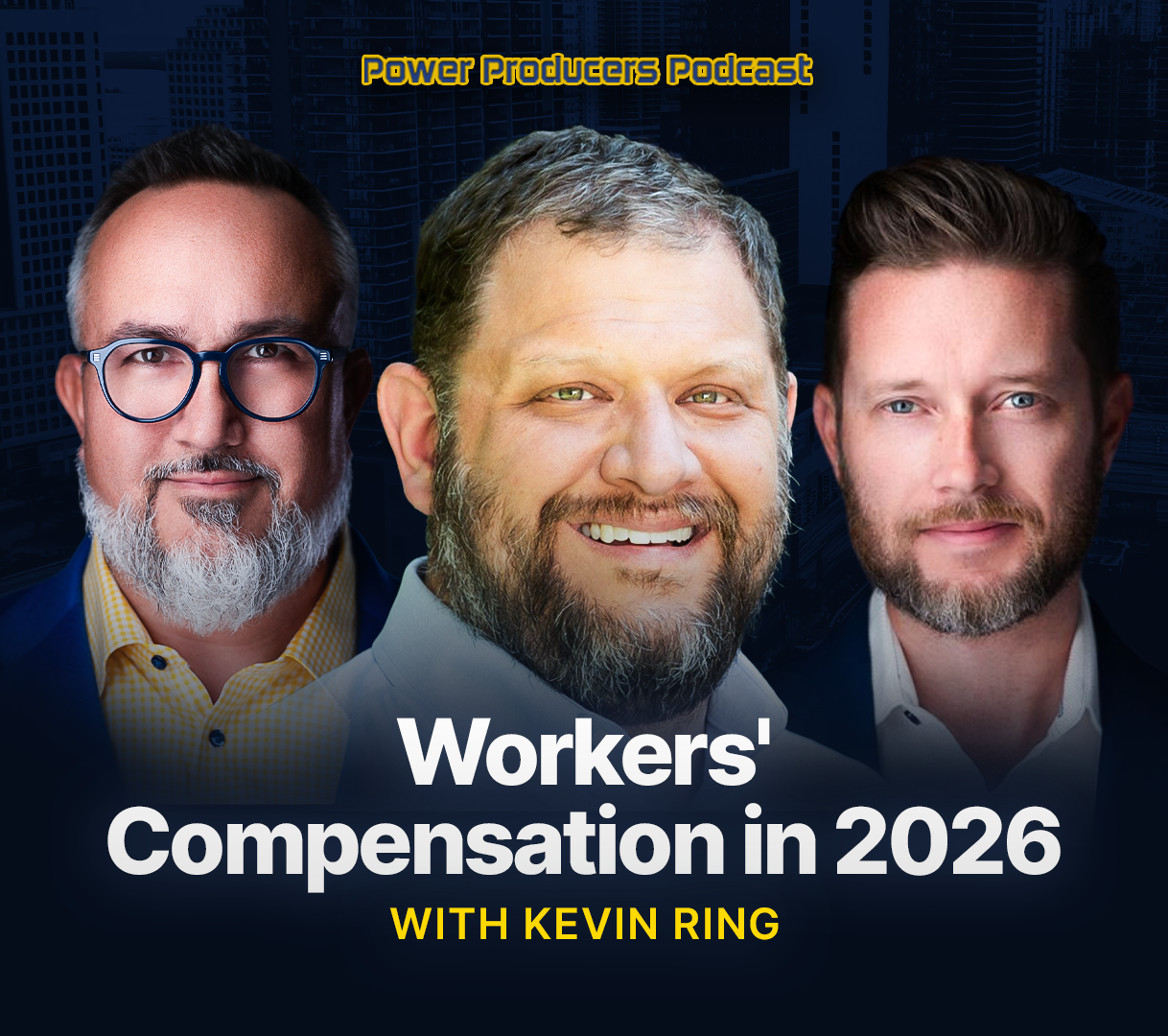
In this episode of the Power Producers Podcast,
David Carothers welcomed
Kevin Ring from the
Institute of Work Comp Professionals to discuss what he is seeing in workers’ compensation heading into 2026. The conversation covered long term rate trends, signs that the market may be approaching the bottom, growing audit scrutiny, Nevada’s major payroll cap change, AI’s role in policy analysis, and the evolving legislative landscape around marijuana and the gig economy. As always, the discussion blended practical strategy for producers with broader industry outlook and regulatory insight.
Key points:
Workers’ Comp Rates May Be Nearing the Bottom
Kevin explains that while most states are still seeing rate decreases, the pace has slowed. California recently posted a rate increase for the first time in over a decade, which could signal broader market shifts. Slowing wage inflation and continued medical cost pressure suggest that long term downward trends may not continue indefinitely.
Premium Audits Are Becoming More Aggressive
Auditors are digging deeper, especially when reviewing uninsured subcontractors. Instead of relying solely on certificates of insurance, they are checking state coverage verification databases to confirm continuous coverage. This shift increases the importance of proper certificate tracking and creates exposure if subcontractor coverage lapses during the policy term.
Certificate Management Is No Longer a Simple Box Check
The conversation highlights how certificates are only a snapshot in time and may not reflect actual coverage intent. With exclusions for additional insured status and evolving endorsement language, producers must understand what policies truly provide. AI driven policy analysis tools are likely to accelerate compliance reviews and uncover hidden coverage gaps.
Nevada’s Payroll Cap Change Is a Game Changer
Nevada historically capped payroll at thirty six thousand dollars per employee, effectively removing many audit conversations from relevance. Beginning October 1, 2026, that cap will shift to a formula based on state wage data, significantly increasing reportable payroll. This change will create new audit exposure and education opportunities for producers who understand remuneration rules.
Legislation Remains Quiet but Marijuana and Gig Economy Issues Persist
While broad workers’ comp reform activity is limited due to overall system profitability, marijuana policy continues to evolve. Questions around drug free workplace credits, reimbursement for medical marijuana, and federal rescheduling remain unresolved. At the same time, classification disputes involving gig economy workers may eventually reshape how companies structure labor relationships.
Producers Must Know What They Are Selling
David reinforces that as AI tools make policy analysis easier, producers cannot rely on surface level understanding. Reviewing forms and endorsements, requesting specimen copies, and understanding exclusions are critical. The risk of losing an account or facing an errors and omissions claim increases when coverage does not align with client expectations.
Connect with:
Visit Websites: