


From Booth to Business: Leveraging Trade Shows and Referral Partners to Grow Your Middle Market Pipeline

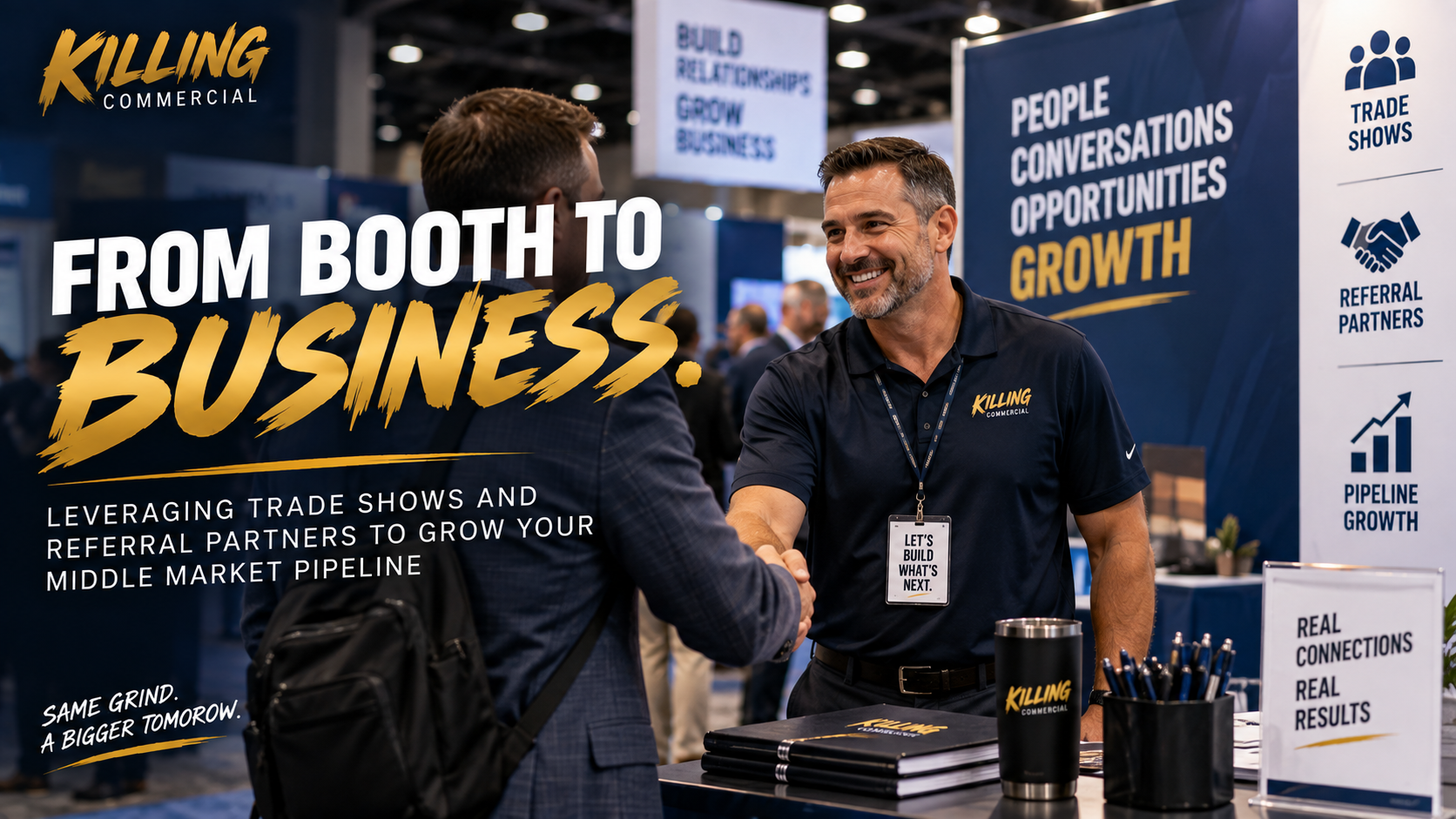
ommercial insurance producer building relationships with prospects at a trade show to grow a middle market pipeline.

Trade shows and referral networks are often overlooked in today’s digital-first world. But if you’re a commercial insurance producer focused on the middle market, these tools aren’t just relevant—they’re indispensable. When leveraged intentionally, they don’t just generate leads—they build momentum, authority, and scalable business development pipelines. In this post, we’ll walk through how to dominate trade shows, build strategic referral networks, and convert attention into long-term revenue, all while positioning yourself as a trusted advisor in a sea of policy peddlers.

Why Trade Shows Still Work in a Digital-First World

It’s easy to believe trade shows have lost their edge. Digital ads are trackable. Cold calls are scalable. LinkedIn outreach is efficient. But none of these strategies offer the human connection and brand immersion that an in-person trade show delivers. The producers who still win business in the middle market understand that success comes from being uncommon in common environments, and trade shows are fertile ground for exactly that kind of differentiation.

The key is understanding the difference between a trade association mixer and a full-scale industry trade show. Mixers are typically social—casual monthly or quarterly gatherings with drinks and light networking. Trade shows, on the other hand, are high-stakes events. They’re the Super Bowl of the niche: full-day or multi-day events where key decision-makers gather, new products are unveiled, and business relationships begin—or deepen.

But just showing up isn’t enough. Attending without a plan is like fishing without bait. If you’re not entering a trade show with a clear goal, a defined message, and an engagement strategy, you’re going to walk away with nothing but stale coffee and a stack of unused business cards.

The Blueprint for Trade Show Success

Start with a Clear Objective

Your trade show strategy begins with one simple question: What do I want to get out of this? Are you attending to generate appointments, increase brand recognition, speak on stage, or create new referral connections? Each goal demands a unique approach.

If your primary objective is to get appointments, your strategy should focus on identifying decision-makers in advance, crafting a compelling booth experience, and setting up post-show follow-up sequences. If it’s thought leadership, your strategy must involve lobbying for a speaking slot and creating marketing collateral to drive attendance to your presentation.

The worst thing you can do is treat your booth like a static display. Trade shows are dynamic. If you’re passive, you’ll be ignored. If you’re strategic, you’ll stand out.

Promote Your Presence Early and Often

Trade show success doesn’t start when you roll in with your booth materials—it starts weeks in advance. Use LinkedIn and email marketing to let your network know you’ll be there. Tag the association, the venue, and any industry influencers attending. The goal is to create pre-show visibility so attendees are already familiar with your name and face when they walk the floor.

You can take it further by using geofencing ads on platforms like Facebook and Google. Target devices that enter the convention space during the show to promote booth traffic or giveaways. This tactic gives you a digital layer of visibility on top of your physical presence.

Design a Booth That Draws a Crowd

Your booth should be a magnet—not a waiting room. Don’t settle for folding chairs and brochures. Instead, offer something unique that’s on-brand and engaging.

One creative idea that’s proven successful is a VR Beat Saber game. Set up a headset and let attendees compete in short game rounds. While they wait, collect their business cards and hand out branded plastic lightsabers for their kids. At the end of the show, raffle off the VR headset. The experience is memorable, the giveaway is family-friendly, and the business card collection is frictionless.

Another high-impact idea is the “Ask an Attorney” booth. Partner with a local business attorney in your niche—like construction or hospitality—and offer free 5-minute consultations to attendees. You provide real value, the attorney builds potential clientele, and you’re positioned as a connector and problem solver.

Use Micro-Events to Educate and Convert

Trade shows are full of distractions, which is why structured micro-events can be so effective. Host a series of short “Coffee Talks” on niche-specific topics and use platforms like Eventbrite to pre-register attendees. Promote these talks through email and social media, and offer an incentive—like a Keurig machine raffle—for participation.

Each coffee talk should be 10–15 minutes and address a specific problem your ideal prospect faces. For example, if you specialize in workers’ compensation for PEOs, a session on how the Defense Base Act applies to co-employment structures is laser-targeted. Attendees self-select based on interest, giving you qualified leads ready for deeper conversation.

Feed the Crowd—Then Feed the Funnel

Never underestimate the power of food. On setup day, order twenty pizzas and some drinks, and invite the other exhibitors to stop by your booth for lunch. This casual hospitality builds goodwill with other vendors, which can result in unexpected referrals or introductions later.

It’s also a great chance to start your follow-up pipeline early. Get business cards from the other vendors you meet, scan them into your CRM, and initiate a light follow-up sequence right away.

What Happens After the Booth Matters Most

Trade show networking strategy focused on building referral partnerships and creating middle market opportunities.

Nail the Follow-Up with Automation and Speed

Your booth could be the busiest one on the floor, but if you don’t follow up, none of it matters. Have a follow-up plan ready to deploy before the event starts. Use a CRM like HubSpot with a business card scanner so you can immediately capture leads and trigger personalized emails.

Your email should thank them for visiting, invite them to connect on LinkedIn, and offer value—like a downloadable resource or video clip from your coffee talk. The first 48 hours after a trade show are critical. After that, attention drops and your opportunity evaporates.

Evaluate the Event with Metrics That Matter

When considering whether to return to a trade show, look at the vendor-to-attendee ratio. If there are three attendees for every vendor, you’re in a crowded pool. If it’s closer to ten or twelve attendees per vendor, you’ve got room to shine.

Also, assess your follow-up ROI. How many appointments did you set? How many converted to proposals? How much pipeline did you generate? Numbers don’t lie—and they help you make smarter decisions next time.

Finally, use the trade show itself to create future marketing content. Post pictures of your booth, videos of the VR experience, testimonials from coffee talk attendees, and behind-the-scenes moments. Build FOMO (fear of missing out) for next year while reinforcing your brand’s personality and reach.

Building a Referral Network That Works While You Sleep

Why Referral Partners Beat Cold Leads

There’s no contest: a warm referral from a trusted source will always outperform a cold call. But too many producers treat referrals as accidental instead of strategic.

You need to proactively build referral partnerships with people already serving the middle market. Think commercial bankers, CPAs, IT service providers, HR consultants, and payroll reps. These professionals speak with the same business owners you want to serve—and they’re often hungry for a partner they can trust.

How to Identify and Activate Referral Partners

Start with your clients. Ask them, “Who do you use for payroll? Who handles your IT? Who supplies your office equipment?” Once you get names, ask for introductions.

Then, nurture those relationships. Create a contact list in your CRM specifically for referral partners. Schedule regular check-ins. Send leads their way. Become valuable to them before asking for anything in return.

You can also use AI tools to your advantage. Ask ChatGPT to generate a list of the top 50 vendors that serve restaurants, contractors, or whatever niche you’re in. Then target their reps in your local market for introductions.

Run Pipeline Reviews Like a Pro

Once you’ve built trust with your referral partners, elevate the relationship. Set up pipeline review meetings where each of you shares active opportunities. Swap notes on who to pursue, who to avoid, and where you can help each other.

This level of transparency transforms your partners from passive referrers to active collaborators. They start to pre-qualify leads based on what they know you want—and your close rate increases dramatically.

Recruit Your Next Producer from Your Referral Network

Here’s a secret weapon: some of your best future producers are already referral partners. Look for reps in hard sales roles—like copier sales, office supply, or telecom—who are hungry, coachable, and tired of starting over every year.

Offer them a pathway into commercial insurance. They don’t need to be experts on day one. You can teach them coverage. What you can’t teach is grit. The producer who was making 50 cold calls a day to sell printer paper will thrive when they learn how to sell value and build residual income.

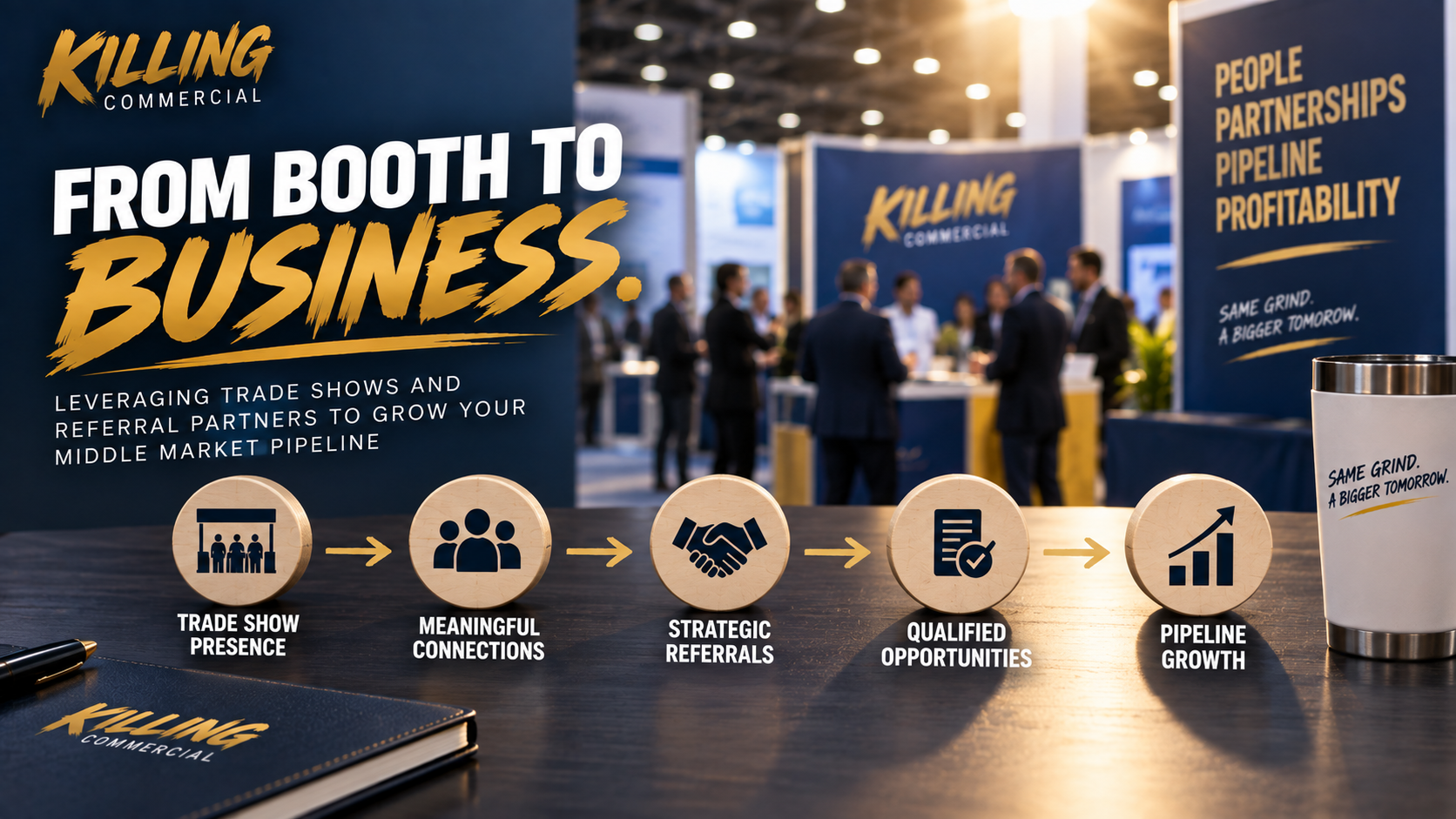
Trade show strategy progressing from meaningful connections and strategic referrals to qualified opportunities and pipeline growth.

Bonus Insight: Balancing Your Book by Revenue Tier

Too many producers build a book that’s top-heavy. Large accounts look great—until private equity buys them and your commission disappears overnight.

David Carothers shared a real-world example: losing just three accounts cost his agency $250,000 in annual revenue. That’s why diversification matters.

Consider segmenting your book into thirds:

  • One-third small commercial for volume and cash flow
  • One-third core middle market for stability and growth
  • One-third strategic large accounts for margin and credibility

You can also use tools like mod analysis and cyber risk assessments to find high-potential, under-served accounts at all tiers. Not every prospect needs to be $50,000 in revenue—if they have a problem and you have a solution, they’re worth your time.

Final Thoughts: Be Uncommon in a Common Environment

If you take one thing away from this post, let it be this: uncommon effort yields uncommon results. Most producers coast into trade shows, stand behind their table, and hope something happens. They treat referrals as nice surprises instead of strategic initiatives.

Don’t be that producer.

Be the one with the VR headset, the coffee talks, and the follow-up plan. Be the connector between clients and value-added vendors. Be the one who turns stale trade shows into fertile ground and random contacts into rock-solid partnerships.

Because when everyone else is going right, it’s your chance to go left—and stand out.

Resiliency Over Reaction: Educating Insurance Buyers in a Hardening Market

Resiliency Over Reaction: Educating Insurance Buyers in a Hardening Market

Insurance agents are facing an unprecedented climate—literally and figuratively. Rates are climbing, carriers are exiting markets, and clients are more frustrated than ever. In states like Florida, where the insurance industry has been grappling with catastrophe exposure and claim volatility for decades, these challenges are nothing new. But for the rest of the country, the learning curve is steep—and accelerating.

Read More »

Responses

Test Message

Killing Commercial Login