
From Cold Drops to Commission Growth: Prospecting Systems that Win in the Middle Market

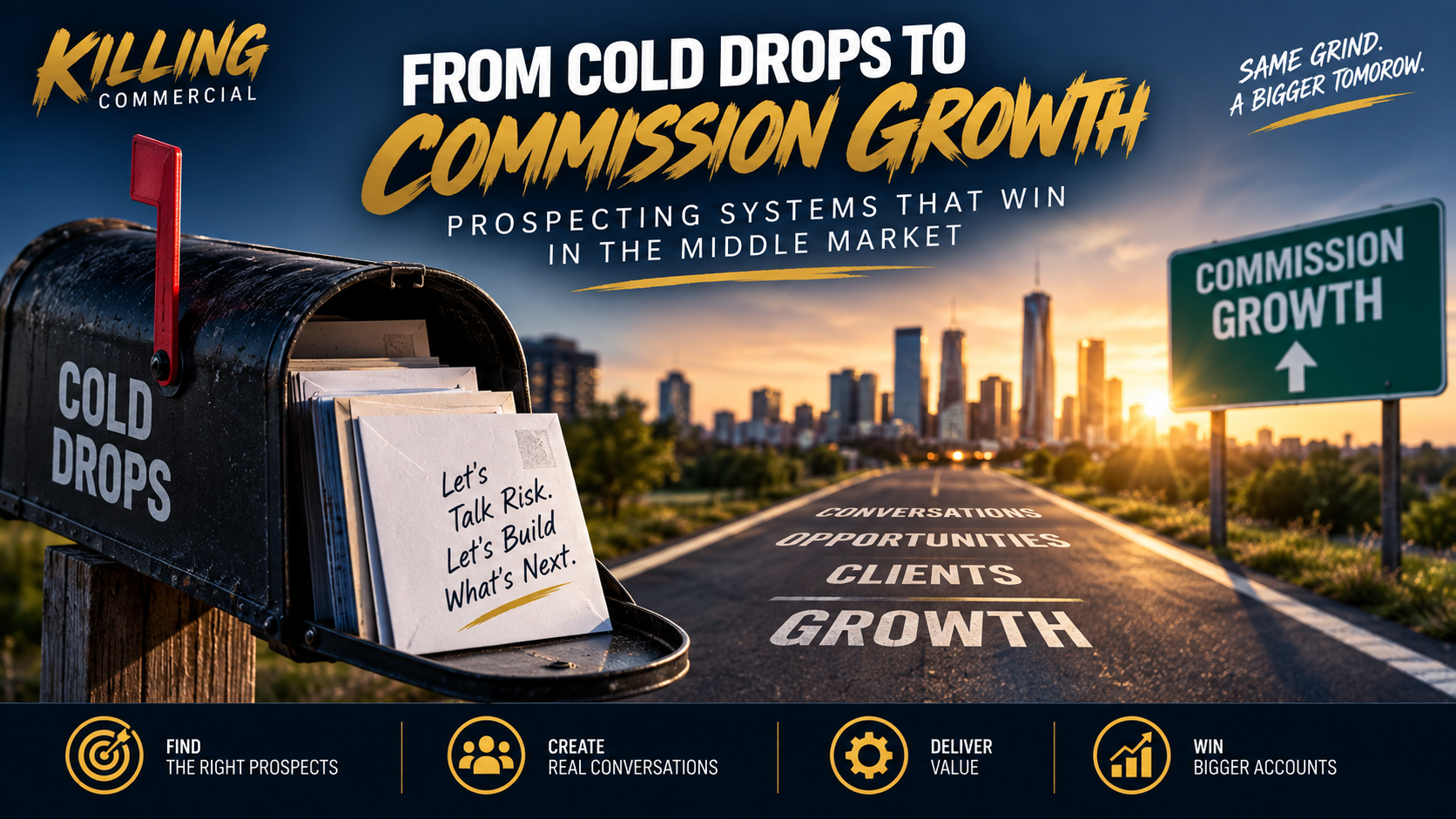
Cold prospecting drops leading to conversations, clients, and commission growth in middle market insurance.

In the hard market we’re navigating today, traditional prospecting methods aren’t cutting it anymore. Cold calls are tougher, marketing drops feel outdated, and clients are more skeptical than ever. The producers who are winning aren’t relying on charisma or sheer willpower—they’re building systems that generate consistent appointments, differentiate them in a crowded field, and create real value for prospects. This post breaks down the exact process that has worked for my agency and dozens of middle market producers across the country. From choosing your niche to executing flawless follow-up, this is the blueprint.

Why Prospecting Has to Evolve in a Hard Market

Let’s get this out of the way: if you’re still approaching prospecting like it’s 2015, you’re already behind. With carriers pulling out of markets, premiums climbing, and underwriting tightening, the key to success isn’t just quoting competitively—it’s qualifying intelligently. That means identifying the right opportunities, asking smarter questions, and offering value before ever talking about premium.

In a hard market, producers must flip the script. Rather than trying to “sell insurance,” we need to approach prospects with a mindset of educating, guiding, and solving operational risk problems. It’s less about quoting and more about showing that you understand their pain points before renewal even comes into play.

Start with Your Niche: How to Choose and Expand Wisely

One of the first questions that came up in the bootcamp was, “How do you determine your niche?” The answer is more nuanced than just “follow the money” or “go where you have contracts.” You need three things: something you’re passionate about, a market that allows you to make an impact, and enough critical mass to make it a viable business.

When I first started, I chose light manufacturing—not because I loved it, but because I saw a strategic opportunity. Chubb was the only carrier offering admitted property capacity in Florida post-hurricane, and I aligned my niche to fit their appetite. By using public data to find manufacturers with the right construction type, distance from water, and favorable risk characteristics, I positioned myself to offer something few others could. The result? $457,000 in agency commissions in 12 months, and I only got through the letter E in my lead list.

Niche markets should also include peripheral industries. If you’re writing HVAC contractors, expand to electricians, plumbers, and tile or flooring companies. Writing trucking? Look at diesel repair shops, roadside assistance companies, or warehousing and logistics firms. Your niche isn’t just one SIC code—it’s an ecosystem.

Building the Infrastructure for Prospecting Success

Prospecting success is 80% prep and 20% execution. Too many producers try to wing it. Instead, build a prospecting infrastructure that starts with data acquisition and ends with CRM automation.

Here’s the stack we use:

  • Insurance Xdate for lead generation and call sheets
  • County occupational license data for legitimate business listings
  • Property appraiser websites to vet building construction types and locations
  • HubSpot to serve as the nucleus for all automation, tracking, and follow-up

It’s not enough to have a spreadsheet. You need a dynamic database that updates with every interaction, flags duplicates, and triggers next steps. A CRM like HubSpot isn’t just about storing contacts—it’s your playbook for how and when to engage with each opportunity.

Personalization Over Gimmicks: What Really Works in a Marketing Drop

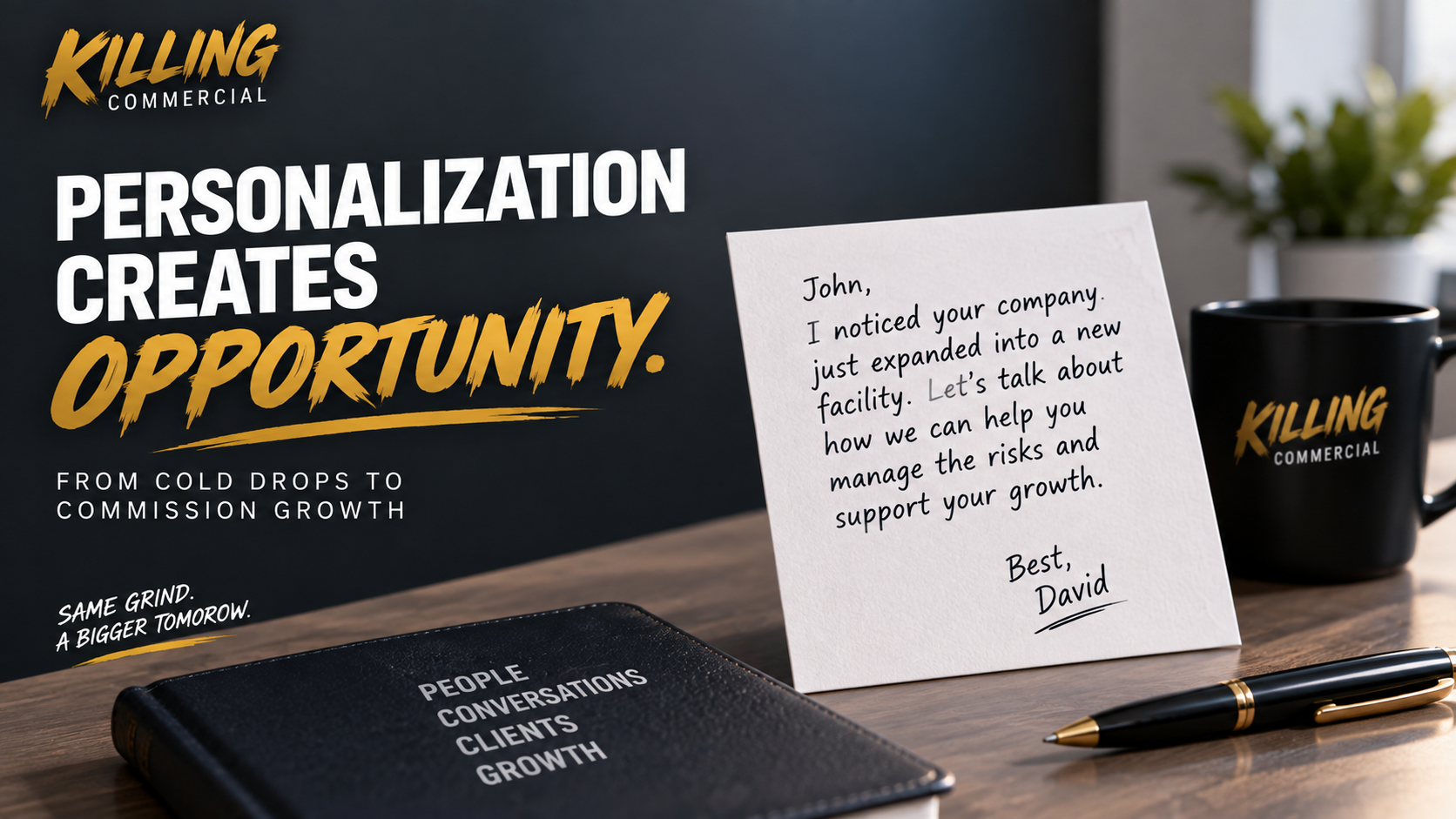
Personalized prospecting message designed to create opportunities and grow middle market insurance accounts.

Let’s be clear: your prospect doesn’t care about your logo or your folder full of policies. They care about whether you know them. That’s why personalized marketing drops work. Even something as simple as using the decision-maker’s name and referencing specific issues in their industry gives the impression that you’ve done your homework.

Yes, gimmicks can get attention. I’ve sent espresso beans labeled “Wake up and smell the coffee” and helicopters missing a remote that prospects could only get by booking a meeting. But even more powerful? A letter with their name and business name, handwritten notes tied to public business journal rankings, and client testimonials from peers in the same industry.

When personalization is real—not just a mail merge—you earn credibility and curiosity.

Follow-Up Like a Pro: Where Most Producers Fail

You can have the best marketing drop in the world, but if you don’t follow up, it dies on the vine. This is where most producers fall short. They over-index on first impressions and under-deliver on follow-through.

Our system is fully automated:

  1. Producer logs drop outcome in HubSpot (met or didn’t meet the decision maker)
  2. A tailored email is triggered based on the response
  3. If the email isn’t opened, a follow-up is sent in 48 hours
  4. After 72 more hours, a third email is sent
  5. Final step? A “breakup” email with one last call to action

In parallel, tasks are assigned to the producer for a call or second visit. This layered approach—automated emails plus human touch—ensures no lead goes cold.

Prospecting Language That Converts: Speak Like a Human

Here’s a secret: your prospects don’t care about “risk management audits” or “experience mod analytics.” At least, not until they trust you. Leading with complex jargon on a first call or drop is a mistake. Speak their language. Be human.

Here’s a sample script that works in today’s market:

“Hey, I know you’ve probably been hit with premium increases like everyone else. I’m going to be out your way Tuesday or Wednesday—could I swing by for a quick intro? Just want to learn more about your business and see if there’s a fit for down the road.”

Simple. Honest. Effective.

Once you’re in the door, then you can dive into what makes your approach different—whether that’s loss trend analysis, mod audits, or fleet safety assessments.

Prospect Respect: Using Letters of Engagement and Generic AORs

One of the most underused tools in commercial insurance sales is the letter of engagement. Before you ever talk quotes or markets, getting a prospect to formally hire you—even if informally via a letter—creates psychological commitment.

Add in a generic AOR, and you now have a strategic advantage. If the incumbent tries to block markets, you have the ability to pivot and fill in carrier names later. While these documents may be worthless in the marketplace (if you lack the carrier contract), they’re priceless in solidifying the relationship.

Know When to Walk Away: Setting Standards with Ideal Prospects

Here’s a truth that doesn’t get said enough: not every prospect deserves your time. If someone is combative, obsessed with price, or refuses to take ownership of their risk profile, they’re not your client. And that’s okay.

I once walked out of a meeting five minutes in. The owner blamed insurance companies, his employees, and everyone else for his problems. I knew I couldn’t help him. Six months later, he referred me to someone else—because I walked away with integrity. Eventually, he came back too.

Calculate your hourly rate. If an account isn’t going to yield at least that rate in commissions for the time spent, say no. You’ll earn more in the long run and gain more respect from ideal clients.

Final Thoughts: Build a Prospecting System, Not a Sales Sprint

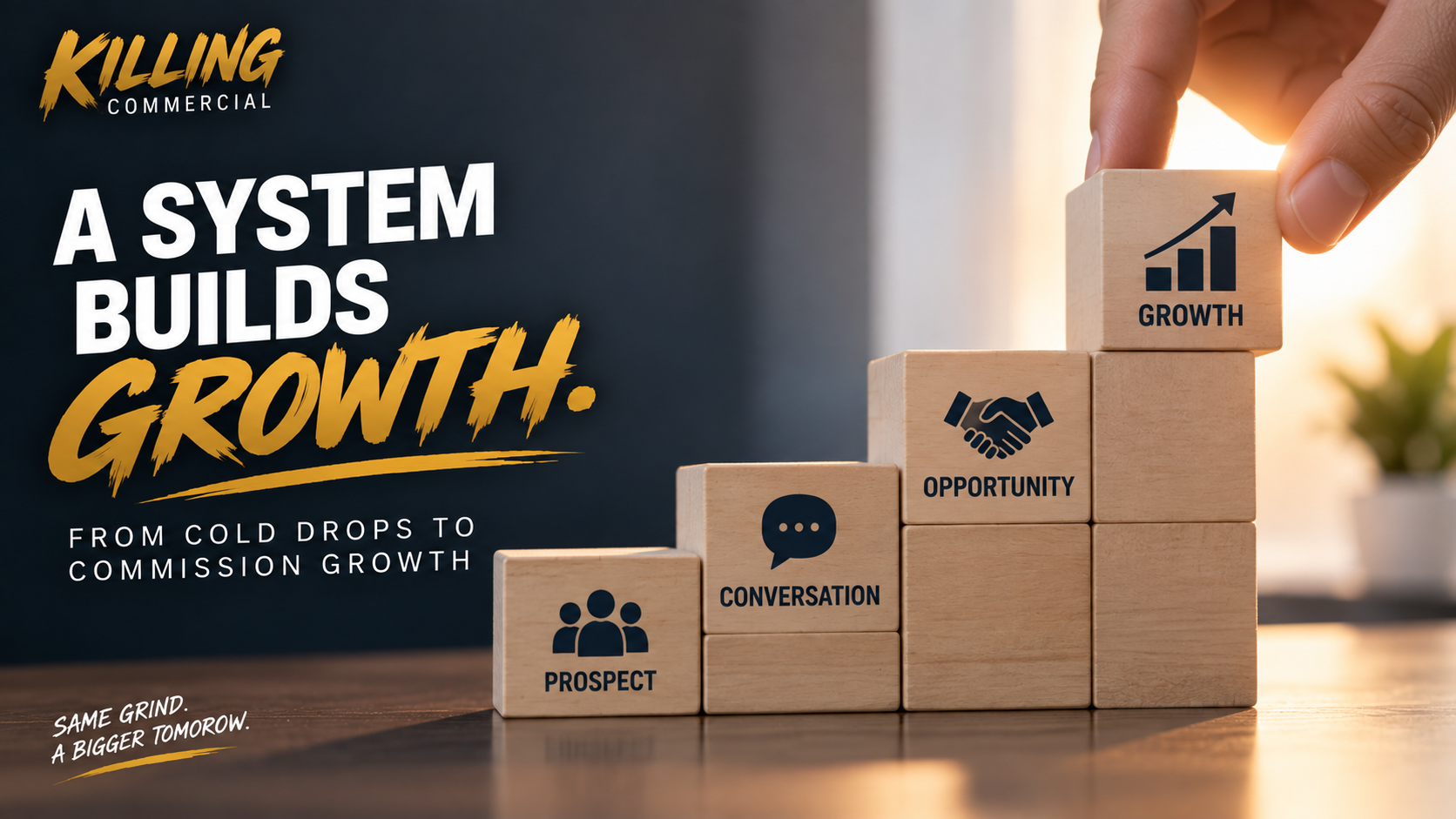
Prospecting system showing the progression from prospect to conversation, opportunity, and commission growth.

The producers who win in this business are not the ones who chase shiny objects or have the best pitch. Winning producers build a system for data gathering, personalization, follow-up, and qualifying.

Success comes from playing the long game. Define your niche, expand into adjacent verticals, use automation to stay efficient, and protect your time with ruthless clarity.

Whether you’re dropping off folders, sending video emails, or mapping out a yearlong drip campaign, remember: the goal isn’t to sell at the first touch. It’s to earn the right to solve real problems.

And when you do that consistently, you won’t just grow your book—you’ll build a business that lasts.

Resiliency Over Reaction: Educating Insurance Buyers in a Hardening Market

Resiliency Over Reaction: Educating Insurance Buyers in a Hardening Market

Insurance agents are facing an unprecedented climate—literally and figuratively. Rates are climbing, carriers are exiting markets, and clients are more frustrated than ever. In states like Florida, where the insurance industry has been grappling with catastrophe exposure and claim volatility for decades, these challenges are nothing new. But for the rest of the country, the learning curve is steep—and accelerating.

Read More »

Responses

Test Message

Killing Commercial Login