
Commercial Insurance Claims Management: Why Claims Can Be Your Strongest Sales Advantage

A prospect may already have competitive pricing, familiar carriers, and an agent they like.
Ask how they manage claims, however, and the conversation can change quickly.
Who knows when an injury happens? Where does the employer track updates? When did someone last review the open claims and explain what needs attention?
Commercial insurance claims management creates an opportunity to answer questions that a renewal proposal often leaves untouched.
In this episode of the Power Producers Podcast, David Carothers sits down with Jess Dantice of Zenjuries and ALKEME to discuss that opportunity.
Their conversation covers claims preparation, reporting delays, employer involvement, automation, and the responsibility that comes with promising a better experience.
For middle market producers, the message is direct.
Claims can help you win the account. Your ability to deliver after the sale determines whether that promise means anything.
Claims Bring the Insurance Conversation Back to the Business
Jess describes claims as one of the biggest weaknesses in middle market commercial insurance.
His perspective comes from competing against larger agencies while running his own business. Those competitors had more people, more resources, and more revenue. His team needed a meaningful way to stand out.
Claims provided that opening.
Business owners purchase insurance because a serious loss can threaten what they have built. Yet the sales conversation can drift toward premiums and proposals without examining how the organization will respond when something happens.
A claim makes that question immediate.
An employee is away from work. Someone must gather information. The owner wants an update, but nobody is certain who has the next answer.
That experience gives producers something concrete to discuss.
Instead of making a broad promise about service, ask the prospect to describe what happened during their last claim. Listen for confusion, delays, and responsibilities that nobody clearly owned.
The opportunity begins with understanding that experience.
Use Loss Data to Ask Better Questions
David explains how claims information can make a business problem visible.
During experience modification reviews, he uses an injuries-by-employee report to identify patterns that may be difficult to recognize across separate loss runs.
Individual incidents can feel isolated when they happen months apart. Bringing the information together gives the owner a different view.
For producers, the useful lesson is to move beyond presenting a stack of reports.
Explain what deserves attention and ask questions about the circumstances behind it.
For example:
Are similar incidents happening repeatedly?
Does the employer understand the pattern?
What changed after the earlier claims?
Who is responsible for reviewing the information?
These questions turn data into discovery.
They also help keep the discussion focused on understanding the situation. A report can reveal a pattern worth investigating, but it does not explain every contributing factor.
The value comes from helping the client see something clearly enough to act on it.
A lengthy report accomplishes little if nobody understands what to do next.
Connect the Right People Before a Claim Happens
Jess identifies three recurring problems in the claims process. The first is that the necessary people are often disconnected before the loss occurs.
An employer may know the agency’s phone number without knowing the actual reporting process. A supervisor may know an employee was injured but remain uncertain about who needs the information.
Those gaps become harder to resolve during an incident.
Jess compares preparation to fixing a roof while the sun is out. Waiting for the storm makes the same job more difficult.
David connects this idea to pre-injury management: everyone should understand their role before an injury happens.
That includes identifying who will investigate, document the incident, submit information, and coordinate the next steps.
For a producer, a practical discovery question is:
“If an employee were injured today, could your supervisors explain exactly what happens next?”
The answer can reveal whether the organization has a working process or simply assumes someone will handle it.
Reporting Delays Deserve More Attention
The second problem Jess highlights is lag time between an incident and its reporting.
He argues that delays remain a significant weakness, even with modern communication tools available.
David illustrates how this can become a useful discovery conversation. When loss information shows a reporting delay, he asks the employer to explain the process behind it.
That is a more productive starting point than immediately recommending another application.
Perhaps the supervisor waits for an office employee. Maybe that employee is unavailable. The reporting instructions could also be unclear or difficult to find.
Each explanation points toward a different improvement.
Producers should therefore examine the sequence of events:
When did the incident occur? When did the employer learn about it? When did the information reach the appropriate claims contact?
The purpose is to identify where the process stalls.
A reporting tool can support faster communication, but the people using it still need clear instructions and responsibilities.
Give Employers a Place to Organize Their Work
Jess’s third point concerns where the employer manages its part of the claim.
Information may be scattered across email, paper files, notes, and spreadsheets. Even when the employer is actively involved, that arrangement can make it difficult to see what remains unresolved.
He recommends asking prospects a straightforward question:
“Where are you managing your own claims?”
Some will say the agent handles everything. Others may describe a spreadsheet or a collection of notes.
Either answer creates room for a more detailed conversation.
What does the employer actually track? Who updates it? How does another person know whether an item is complete?
In workers’ compensation, Jess points to responsibilities involving return-to-work efforts, appointment follow-up, and internal coordination.
These are activities the employer cannot simply forget because a claim has been reported.
A useful process makes the employer’s responsibilities visible and easier to follow.
That is different from assuming that the carrier, agency, and employer all know what everyone else is doing.
Your Client May Assume You Are Watching Every Claim
One of the episode’s strongest challenges is directed at agents.
Clients may believe their agency is monitoring claims throughout the year. David asks whether that belief matches what the agency actually does.
Are loss runs reviewed regularly? Does someone follow open claims? Is there a schedule for checking what has changed?
Without that structure, the agency can discover problems much later than the client expects.
David describes using reminders and access to claims information to support his own review process. The point is that attention has to be built into the agency’s work.
For agency owners, this creates an important internal question:
What claims support have we promised, and how do we know we are delivering it?
The answer should be specific enough that a team member can explain the process.
“Call us if you need anything” leaves substantial room for different expectations. A defined review process gives both the agency and client a clearer understanding of the service.
Transparency Should Lead to Useful Follow-Through
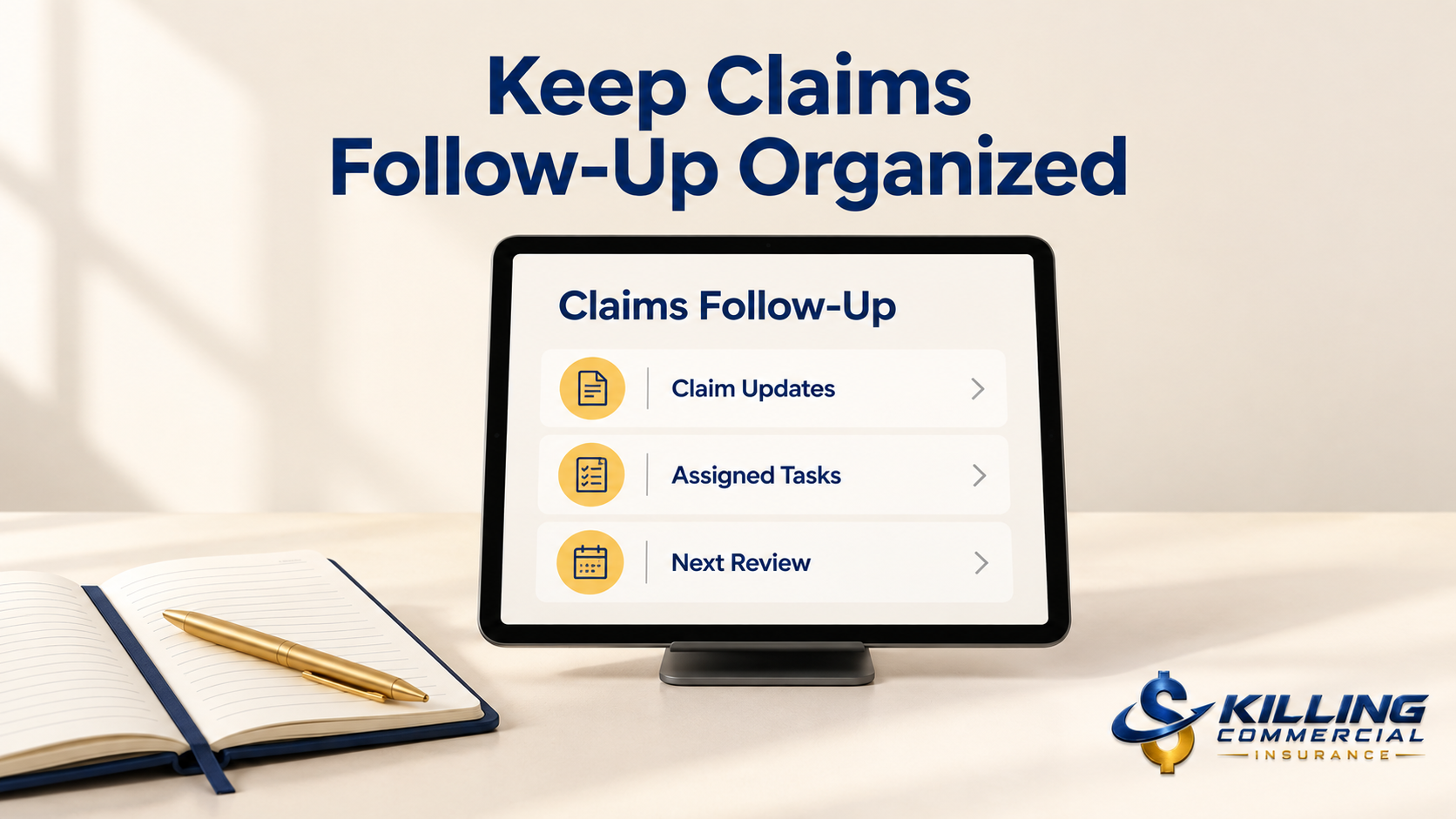
David and Jess also discuss access to claims information.
A loss run can provide a starting point, while additional detail may help explain what is happening. David shares an example of a carrier portal that, in his experience, gives him more visibility into individual claims.
His larger point concerns the ability to understand the situation before discussing it with the client.
Jess extends that idea to the employer. Better visibility should help the policyholder understand its own responsibilities and outstanding questions.
However, access alone does not complete the work.
Someone still needs to review the information, identify what requires attention, and communicate with the appropriate people.
For producers, that distinction matters when presenting a technology solution.
A dashboard is useful when it supports a defined process. The client should understand how the information will be used and who will follow through.
Otherwise, the organization has gained another place to look without necessarily improving how it responds.
Automate Routine Tasks to Support Consistent Service
Jess acknowledges the limits of a producer’s time.
An agency can promise hands-on attention, but growth adds more accounts, more claims, and more follow-up. Relying on one person’s memory becomes increasingly difficult.
He describes automation as a way to support the repetitive administrative work surrounding claims.
The goal is to make the promised service more sustainable.
For example, a practical agency process might use reminders to prompt a review or maintain a shared record of outstanding tasks. Those are applications of the discussion, rather than a claim that every platform provides the same features.
The agency still needs to decide who acts when something needs attention.
David and Jess discuss Zenjuries as one way to support this work. Jess also makes clear that agencies need a functioning solution, whether they use his platform or another approach.
Technology earns its place when it helps the team do what it promised consistently.
Purchasing access is only the beginning.
Do Not Sell Claims Support You Cannot Deliver
Jess gives producers a clear warning: be careful about making claims promises that the agency cannot fulfill.
Claims may provide a strong sales opening because the experience matters deeply to the buyer. That same importance raises the cost of failing to follow through.
A client who selected an agency for better claims support will notice when that support does not appear.
David reinforces the point by asking what agents would change after losing an account following a claim.
That question deserves an honest answer.
Was the reporting process unclear? Did the client expect updates nobody was assigned to provide? Was a tool available but never implemented?
An agency should resolve those weaknesses before using the same promise in another presentation.
The sales message and service model need to match.
If producers describe a specific process, the team should be ready to put that process into operation when the relationship begins.

Build a Process That Continues After Reporting
David describes a connected approach that moves from pre-injury preparation into reporting, return-to-work coordination, and ongoing claims monitoring.
That sequence matters because submitting the initial information is only one part of the employer’s experience.
Before an incident, employees need to know their roles. Afterward, the employer needs a way to coordinate its responsibilities and stay informed.
Meanwhile, the agency needs a repeatable method for supporting the relationship.
For producers, this provides a stronger basis for differentiation than a general statement about caring more.
Explain the stages. Show where responsibilities sit. Describe how the client will participate.
A practical way to prepare is to walk through a hypothetical incident with the service team.
Who receives the first call? Where is the information recorded? What happens next? Who follows up?
If those answers are unclear internally, the process is not ready to become a confident sales promise.
AI Should Make the Producer’s Work Easier to Execute
The conversation later turns to ALKEME and the technology work Jess describes Ryan Deeds leading.
Jess discusses a producer portal that brings together prospect information, outreach capabilities, and automation. His enthusiasm centers on reducing the effort required to find opportunities and begin conversations.
David connects that discussion to his own experience using CRM information, reporting, and AI-supported tools.
The connection to claims is practical: organized information becomes more useful when people can act on it.
A producer benefits from knowing which prospect deserves attention. An agency team benefits from knowing which claim requires follow-up.
In both situations, the technology should support a clear next step.
Agency leaders can apply that principle when evaluating tools. Ask which recurring task becomes easier, what information the employee receives, and what action should follow.
That creates a more useful standard than collecting features.
The episode describes the speakers’ experiences and perspectives; it does not establish that any platform guarantees leads, sales, or claims outcomes.
Strong Relationships Begin With a Willingness to Give
David and Jess also spend time discussing Producers in Paradise and the relationships formed there.
Jess shares how connections made through the community led to friendships and later business opportunities. His emphasis is on the relationship itself, rather than approaching every interaction as an immediate transaction.
David explains that connecting people is a major part of why he continues building the community.
He knows producers who need help and others who have relevant experience. Bringing those people together creates opportunities that separate coaching conversations cannot always provide.
That principle also fits the claims discussion.
A producer earns trust by understanding a problem and helping the client work through it. The relationship becomes stronger when the promised help is real.
Jess closes with a challenge to arrive expecting to make other people’s lives better.
For producers, that is a useful standard both inside a professional community and across the client portfolio.
Turn Commercial Insurance Claims Management Into a Daily Practice
David ends with a warning about what happens after a motivating event.
People leave with energy and good intentions. Within a few weeks, old habits can return unless they deliberately apply what they learned.
The same risk exists after listening to a useful podcast.
Recognizing that claims could improve your sales conversations is not the same as building the process to support them.
Start with one account.
Review the available loss information. Ask how incidents are reported. Confirm what the employer believes your agency is doing and compare that expectation with your actual service.
Then identify one improvement your team can implement and maintain.
Perhaps the account needs a clear reporting contact, a scheduled review, or a better way to track outstanding responsibilities.
The strongest claims sales advantage is a process the client can see working after the sale.
Build that process, explain it clearly, and follow through when the client needs it.

Building a Data-Driven Insurance Agency: Premium Is for Show, Revenue Is the Dough
An agency can write more premium and still struggle to understand whether the business is becoming more profitable. Premium volume tells part of the story.
Insurance Intake Automation: How Better Data Creates Better Client Conversations
A prospect agrees to talk about insurance. Then the work begins: locating declarations pages, answering questions, sending documents, and repeating information that already exists somewhere

Value-Based Selling in Insurance: How Guffy Wright Creates Client Alignment
Guffy Wright thought he had presented an offer that would be difficult to refuse. His insurance proposal was approximately $2 million less expensive, and he

Leadership Skills for Insurance Producers: Building Confidence, Making Better Decisions, and Understanding People
Sitting in a prospect’s parking lot, David Carothers started questioning whether he belonged inside the building. The company was a significant opportunity. Its operations were
Commercial Insurance Prospecting: How Better Data Creates Better Producers
A renewal date tells you when to call a business. It does not necessarily tell you why the owner should take the call. That difference

Relationship Building in Sales: The Human Advantage in the Age of AI
A baseball card tucked inside a thank-you note would be easy to overlook. For Patrick Galvin, it became a reason to return to a mortgage
Responses