
Insurance Intake Automation: How Better Data Creates Better Client Conversations
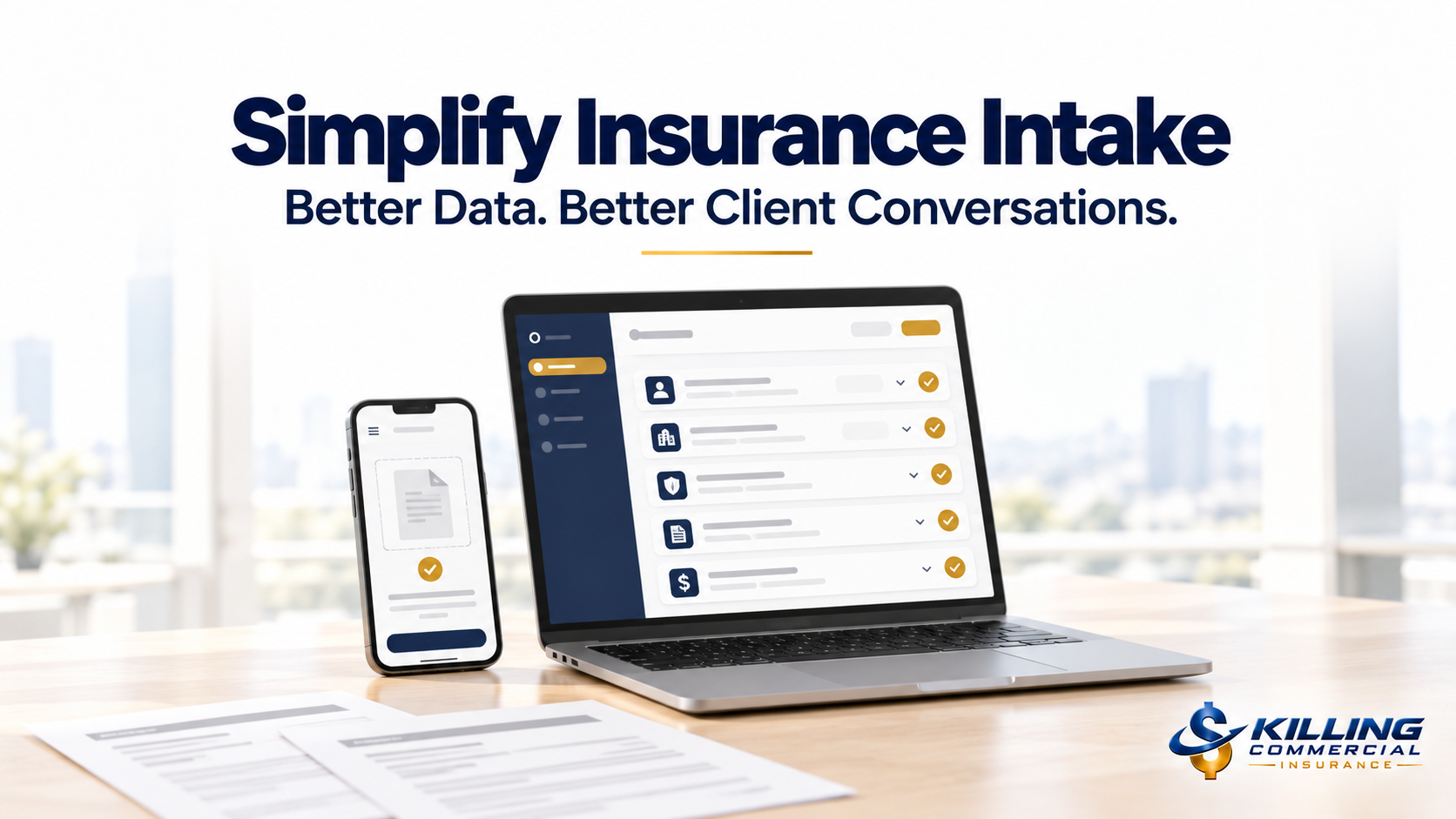
A prospect agrees to talk about insurance. Then the work begins: locating declarations pages, answering questions, sending documents, and repeating information that already exists somewhere else.
For the agency, that information may travel through email, notes, applications, and quoting systems before anyone can use it effectively. For the prospect, the process can feel like a series of obstacles between the first inquiry and a useful conversation.
Insurance intake automation addresses that part of the experience. Its value comes from making information easier to share, organizing it for the agency, and helping producers arrive prepared.
In an episode of the Power Producers Podcast, David Carothers sat down with Ray Huang, Vice President of Marketing at Canopy Connect, to explore how insurance intake is evolving. Their discussion covered structured data, client sharing preferences, branded intake pages, integrations, application prefill, and policy comparisons.
David brought the perspective of an agency owner who uses the platform. Ray explained how Canopy Connect has developed beyond collecting declarations pages into a broader intake workflow.
For producers and agency owners, the conversation offers a practical question: what happens to the information a client gives you, and how much unnecessary effort sits between receiving it and putting it to work?
Insurance Intake Automation Starts Before the First Advisory Conversation
An agency’s intake process helps shape the client’s first impression.
A prospect may arrive through an advertisement, a referral, or a producer’s outreach. At that point, the person may know very little about the agency or what will happen next.
If the first request is unfamiliar or difficult to complete, the conversation can stall before the producer has an opportunity to demonstrate value.
David described that challenge in the context of his agency’s personal lines marketing. Someone responding to an advertisement may be focused on obtaining a quote quickly. The agency then needs to explain its process and make the next step manageable.
That requires attention to both the person and the workflow.
What does the prospect understand about the request? Can they find the information? Are they comfortable with the method you have provided? Is there another route if that method does not work for them?
A well-designed intake process considers those questions early. It gives the prospect enough context to proceed while helping the agency collect useful information.
The result is a stronger starting point for the conversation that follows.
Collect Information You Can Use Beyond the Document
Ray explained that many agents first encountered Canopy Connect as a way to obtain declarations pages.
The familiar process involved sending a link, allowing the prospect to select a supported carrier, and using a consent-based connection to share insurance information.
However, he described a broader objective: obtaining information in a format that agency systems can use.
A declarations page is valuable because it contains details about the existing insurance program. The next challenge is making those details available without requiring someone to read and retype each item.
Ray discussed collecting structured information directly through carrier connections and extracting it from uploaded documents.
That distinction matters because receiving a document does not complete the administrative work.
If an employee still has to enter policy numbers, limits, deductibles, and other information into several systems, the agency has improved collection while leaving much of the handling unchanged.
The useful question is what happens after the information arrives.
Can the team find individual details quickly? Can the information populate the relevant fields? Can another system use it?
Those capabilities determine how far the intake improvement reaches.
What Structured Insurance Data Means
David paused the discussion to ask Ray to explain structured data in plain language.
Ray’s answer centered on individual fields.
If you copy all the text from a policy document into one notes field, you have saved the information. But the policy number, premium, and coverage details remain mixed together.
Structured data separates those items into identifiable places.
An auto policy can have a policy number field, a carrier field, vehicle records, and fields for particular coverage details. Other policies can have their own corresponding records.
That organization makes it easier to move specific information into another system.
Give each detail a defined place
The difference becomes clear when someone needs to use the information again.
A team member reading a document can identify a deductible. A connected system needs to know which deductible it is and where that value belongs.
Consistent structure supports that handoff.
It also helps the agency avoid depending on how each employee writes notes. One person may use abbreviations, another may paste a paragraph, and another may record only part of the information.
Defined fields create a more consistent starting point.
That does not mean every detail is complete or that review becomes unnecessary. It means the agency can work with individual pieces of information instead of repeatedly interpreting the same document from scratch.
Give Prospects More Than One Way to Share
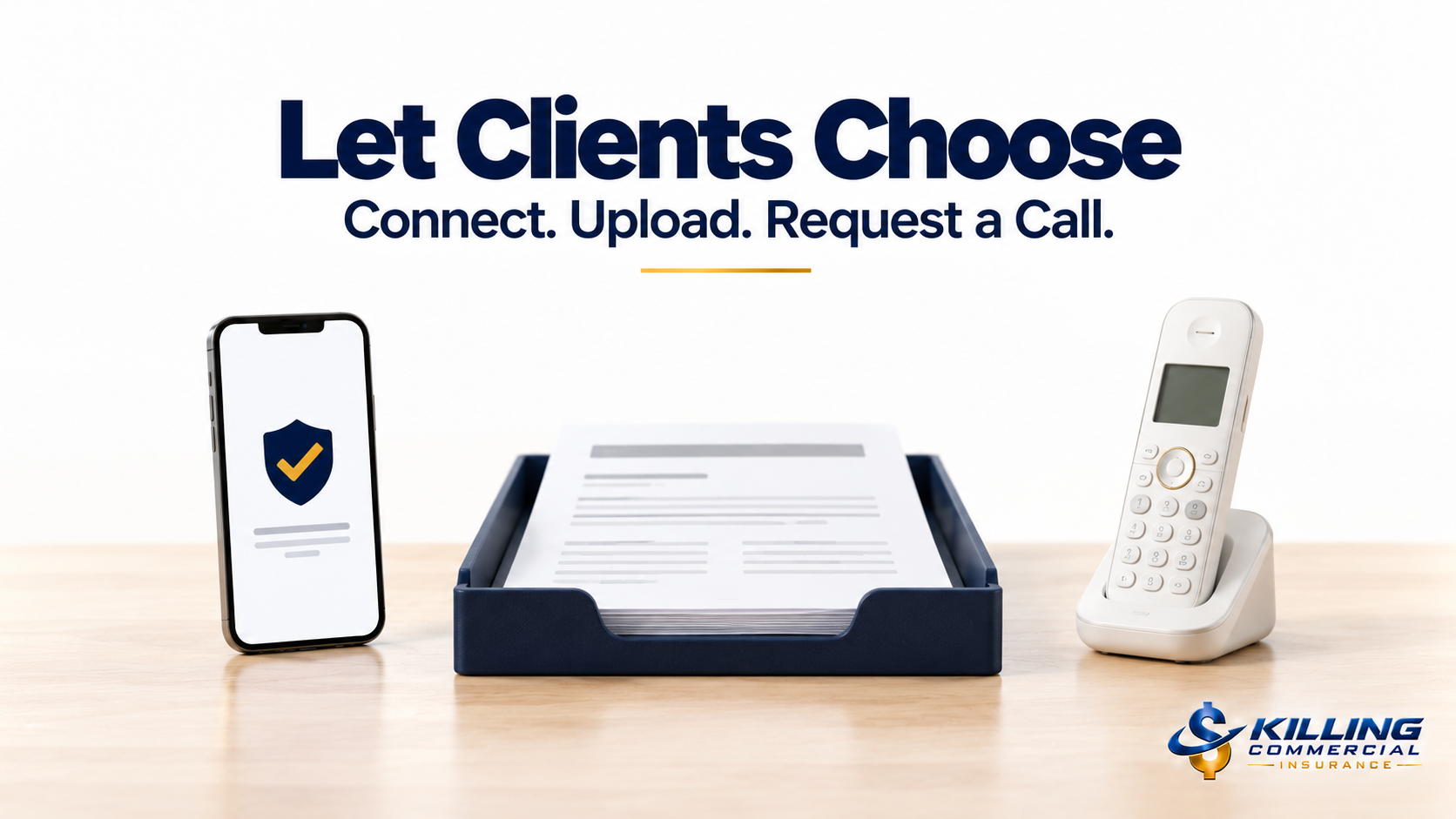
Ray described several intake options: connecting a supported carrier account, uploading documents, completing forms, or requesting a callback.
Those options respond to a practical reality. People do not all have the same information available or feel comfortable sharing it in the same way.
A business owner may have declarations pages but no carrier login. Another prospect may prefer to connect an account. Someone else may want a person to guide them through the process.
An intake workflow that accommodates those differences can keep the conversation moving.
Let the client choose while keeping the agency organized
The client-facing experience can vary while the agency still aims for consistency in how it records and uses the information.
A callback, for example, can be a defined part of intake rather than an informal conversation that leaves details scattered across notes.
Document upload can provide an alternative for someone who does not want to use a carrier connection.
The objective is to make the next step achievable for the client and useful for the agency.
David’s comments highlighted the importance of explaining the purpose of the request. A person who understands why you need the information is better positioned to choose a suitable way to provide it.
That explanation belongs in the workflow, alongside the available options.
Use Forms for the Questions Existing Records Cannot Answer
Existing policy information can tell an agency a great deal, but it does not explain everything about the client’s current circumstances.
Ray described using forms to gather additional information after other sharing methods.
That is important because a document may reflect an earlier point in time. The business or household may have changed since the policy was issued.
The producer still needs to ask what is happening now.
For commercial accounts, that could involve changes in operations, locations, equipment, or staffing. In personal lines, it may involve circumstances that are not clearly represented in the existing policy information.
Make additional questions serve a purpose
A form should help fill a meaningful gap.
Collecting information that the agency already has can create unnecessary work for the prospect. Asking too little can leave the producer unprepared.
A useful approach begins with what has been collected, identifies what remains unknown, and asks the questions needed for the next stage.
That keeps intake connected to discovery.
The goal is to reduce repetitive information gathering while preserving the questions that require the client’s current knowledge and judgment.
Introduce the Agency Before Asking for Information
Ray described Trailhead as a more contextual entry point than a basic sharing link.
In the episode, he compared it to a digital business card. It can introduce the agent, provide contact information, and explain the agency before the prospect chooses how to share.
That context matters because a link by itself may leave the recipient uncertain about who is requesting the information.
A recognizable introduction helps connect the request to a person and a purpose.
Make the first step feel connected to the relationship
A producer’s photo, contact details, and a clear explanation can help a prospect understand where they have arrived.
The experience can also reflect how the introduction occurred. Someone referred by a mortgage professional should be able to recognize the connection between that referral and the agency’s intake page.
Ray paired Trailhead with Sharing Paths: introduce the agency first, then provide the available ways to proceed.
The broader lesson applies to any intake process. Before asking people to complete a task, help them understand who is involved and what the task will accomplish.
For more detail, explore Canopy Connect’s explanation of Trailhead and its insurance intake experience.
Give Referral Relationships Useful Context
The conversation also explored intake links created for referral partners.
Ray described adding context that connects the partner with the agency. That can help the prospect understand why they received the link and what relationship brought them there.
For the agency, identifying the source can also support a better understanding of referral activity.
Knowing that an inquiry came from a dealership is useful. Knowing which location or contact made the introduction can make follow-up more relevant.
That information helps the agency examine how referral relationships are working and communicate with the people involved.
The practical value is continuity.
The prospect moves from the referral into a recognizable intake experience, and the agency receives enough context to understand the introduction.
A referral should feel like a connection between people. The intake process can help preserve that connection as information moves into the agency’s systems.
Apply the Same Process to Documents Collected in Person
David raised a useful question for outside producers.
What if the client hands you documents directly rather than completing the digital sharing process? Can the agency still obtain the benefits of organized data?
Ray described uploading documents from the agent-facing dashboard and using a mobile intake process to capture paper pages.
That gives producers a way to retain the client’s preferred interaction while improving what happens afterward.
Build the back-office step into the producer’s routine
David recalled returning from prospecting with declarations pages and storing them in folders. The documents contained valuable information, but organizing and using it required additional manual work.
A defined upload process can make that information more accessible to the rest of the agency.
After the meeting, the producer can place the documents into the intended intake workflow, review the extracted information, and continue with the next task.
That helps prevent different collection methods from creating different internal processes.
The person who shares through a link and the person who hands over documents can both enter a workflow the agency knows how to manage.
For commercial producers, that flexibility is especially relevant when the business relies on its broker to manage policy records and does not regularly access a carrier portal.
Connect Intake to the Systems Your Team Already Uses
David asked whether Canopy Connect could become a single source of truth for an agency.
Ray gave a more specific answer. He described the platform as a purpose-built intake solution that works with the agency’s chosen technology stack.
The team may still spend most of its day inside a customer relationship management system or agency management system. The objective is to move useful intake information into those systems.
That distinction helps keep the workflow practical.
An agency does not necessarily need another place where staff must maintain the same records manually. It needs a clear path from collection to the tools where the work continues.
Define the handoff
Which information should move? Where should it go? Who needs to review it? What happens when something is missing?
Those questions matter as much as whether two products can connect.
Ray discussed direct integrations and options for custom connections. David also raised the possibility of using collected information to support application workflows.
The practical takeaway is to evaluate the full handoff rather than stopping at the word integration.
A connection creates value when it supports the way the agency actually works and reduces a specific source of repetition.
Reduce Repeated Entry with Policy Paste
Ray described Policy Paste as a Chrome extension that helps transfer collected information into online forms, including carrier application workflows.
The use case is easy to recognize. An agency has already collected information, but someone still needs to enter it into the next web form.
Prefill can reduce that repeated work.
Ray also discussed adjusting mappings when the destination form does not match perfectly. Different systems ask for information in different ways, so the team needs to check how the values appear.
Review the result before proceeding
The useful workflow is to transfer the information, review the populated fields, and complete anything that remains unanswered.
That review keeps the efficiency gain connected to the application’s requirements.
A producer may save time by avoiding repeated typing while still needing to answer questions about the current risk. Those are different tasks.
The first is administrative. The second requires understanding the client and the business.
For current details about the extension, visit Policy Paste by Canopy Connect.
Understand Why Connections Need Ongoing Maintenance
David and Ray discussed the work involved in keeping systems connected.
A carrier or software provider can change how its information is organized. An update that appears small to an agency user may affect a connection behind the scenes.
Ray described the ongoing effort required to monitor carrier connections and respond to changes.
David connected that to his own experience with agency technology.
The lesson for agency owners is to consider maintenance alongside the initial capability. A connection needs to continue working as the systems around it change.
Evaluate the workflow that matters to your agency
A product can support a broad range of carriers or systems while still needing attention for a particular use case.
The agency should examine the carriers, policy types, and destination tools it actually uses.
Can the intended information be collected? Does it arrive in the right place? What alternative process is available when a particular connection does not work?
Those questions help the team set realistic expectations and use the technology consistently.
The relevant measure is how the workflow performs in the agency’s own environment.
Ask Where the Information Came From
Ray’s discussion of AI repeatedly returned to data quality.
He emphasized understanding the source of the information before relying on it in a client conversation.
That matters because an impressive summary can still contain details that are incomplete or no longer current.
A client who sold a vehicle or changed a location may quickly identify an outdated assumption. The producer then needs to correct the information before making a recommendation.
Carrier-connected records and uploaded documents provide a starting point, but they still need context.
What period does the information reflect? Has anything changed? Does the client recognize the details as current?
Use source information and client confirmation together
The strongest conversation combines preparation with verification.
Review what has been collected, identify uncertainties, and ask the client about changes.
That gives the producer a more reliable basis for advice than treating every available field as a complete description of the present situation.
The episode’s broader point is that credibility depends on information the adviser understands and can explain.
AI can help organize that information. The producer still needs to know what supports the conclusion.
Use Policy Comparisons to Explain the Recommendation
Ray also described a policy comparison capability.
The concept was to bring proposed quote information back alongside the existing policy data so the agent and client could examine the differences.
That can make a recommendation easier to discuss.
A price change may be connected to different limits, deductibles, or other terms. If the conversation focuses only on the premium, the client may miss what changed.
A comparison provides a place to begin the explanation.
Connect the differences to the client’s priorities
The producer needs to explain which differences matter and why.
What is being recommended? How does it address the client’s situation? What questions remain?
The comparison supports that conversation, but the adviser still needs to review the underlying documents and confirm the important terms.
This connects to a theme across the Power Producers Podcast: clients need a clear reason to value the proposed approach.
For a related discussion, explore Guffy Wright’s lessons on client alignment and value-based selling.
Let Automation Improve the Human Conversation

Ray described the difference between arriving prepared and beginning a meeting with a long list of basic information requests.
If the producer has already reviewed the existing insurance information, the conversation can move toward what the client wants to accomplish and what has changed.
That is where intake automation supports advisory work.
The time saved has a purpose: better questions, clearer explanations, and more attention to the client.
For commercial producers, that might mean discussing operational changes or the business’s direction. In personal lines, it may mean explaining a recommendation and understanding the household’s priorities.
The producer remains involved where interpretation and judgment matter.
For another discussion of those skills, explore the episode on leadership and emotional intelligence with Kasey D’Amato.
Put a Better Intake Process into Practice
David and Ray’s discussion offers several actions agencies can apply to their existing workflows:
Review the first request you send. Make sure the prospect understands who is asking, what information is needed, and what will happen next.
Offer suitable sharing options. Give clients an alternative when the initial method is unavailable or uncomfortable.
Identify repeated data entry. Follow the information from collection through quoting and determine where someone enters the same details again.
Define the important fields. Decide which information needs to be organized consistently for the next system or task.
Create a routine for documents collected directly. Help producers place emailed, uploaded, and paper documents into a process the team understands.
Review automated handoffs. Confirm that information reaches the intended records and fields.
Check what has changed. Use collected records as preparation, then verify the current situation with the client.
Explain the recommendation. Use comparisons and organized information to make relevant differences easier to understand.
Start with one recurring source of friction. It could be a document request that repeatedly stalls, a field staff retype in several places, or a handoff that leaves the next person uncertain.
Improving that step gives the agency something concrete to evaluate before extending the approach.
Conclusion: Make Information Easier to Share and More Useful to Receive
Insurance intake automation creates value when it improves both sides of the exchange.
The client needs a clear, manageable way to provide information. The agency needs that information in a form it can review and use.
Ray Huang and David Carothers show how those needs connect through sharing options, structured data, integrations, and thoughtful preparation. The practical benefit extends into the next conversation: producers can spend less time gathering familiar details and more time understanding the client.
Choose one point in your intake process that creates unnecessary effort. Clarify the request, improve the handoff, or remove repeated entry, then examine how the change affects the team and the client.
To hear the discussion in full, watch the Power Producers Podcast episode with Ray Huang. You can also explore Canopy Connect’s commercial insurance intake capabilities and find more practical agency conversations on the Power Producers Podcast.

Insurance Intake Automation: How Better Data Creates Better Client Conversations
A prospect agrees to talk about insurance. Then the work begins: locating declarations pages, answering questions, sending documents, and repeating information that already exists somewhere

Value-Based Selling in Insurance: How Guffy Wright Creates Client Alignment
Guffy Wright thought he had presented an offer that would be difficult to refuse. His insurance proposal was approximately $2 million less expensive, and he

Leadership Skills for Insurance Producers: Building Confidence, Making Better Decisions, and Understanding People
Sitting in a prospect’s parking lot, David Carothers started questioning whether he belonged inside the building. The company was a significant opportunity. Its operations were

Commercial Insurance Prospecting: How Better Data Creates Better Producers
A renewal date tells you when to call a business. It does not necessarily tell you why the owner should take the call. That difference

Relationship Building in Sales: The Human Advantage in the Age of AI
A baseball card tucked inside a thank-you note would be easy to overlook. For Patrick Galvin, it became a reason to return to a mortgage

AI for Insurance Agencies: How Better Processes Give Producers More Time to Sell and Advise
Saving time means little if the client never experiences the benefit. An agency can automate renewal preparation, organize information faster, and reduce repetitive work. The
Responses