
Last Updated on: October 14, 2025

5 Tool Players Have Cold Calling Game

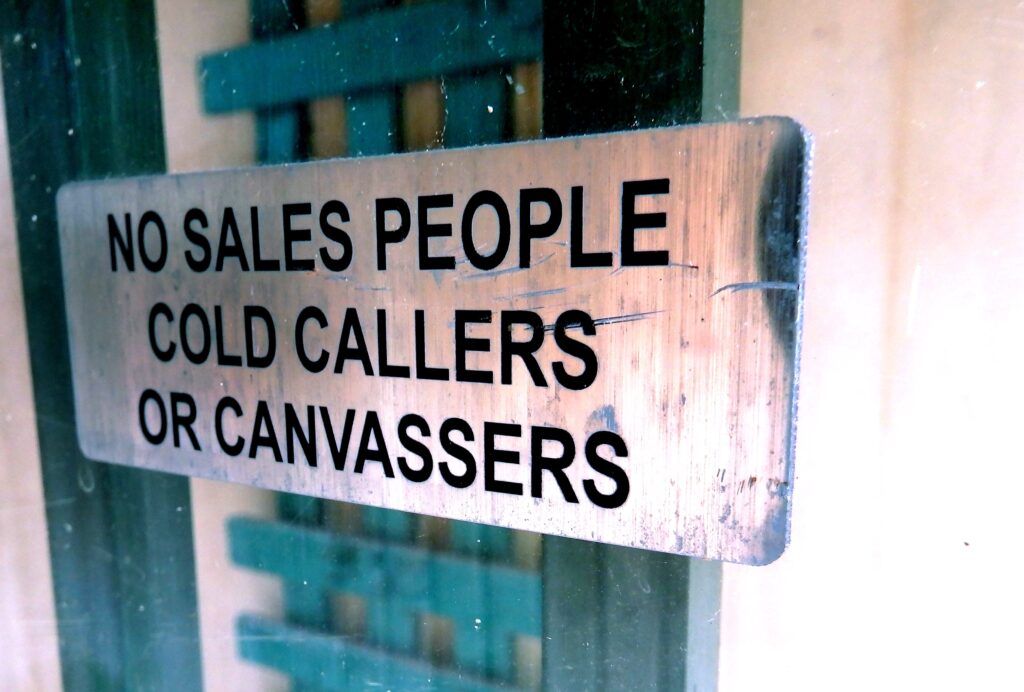
As we continue our series on being a five-tool producer, today we’re going to talk about the one that I honestly think is the most important, and that is cold calling. I’m not talking about cold-call telemarketing. We already talked about phone skills in a different post. I’m talking about you rolling up in somebody’s business and staking your claim, telling them who you are and why they should hire you. If you don’t know how to do that or you don’t have the confidence, I’m going to give you some tips today that’ll take your game to the next level.

If you’re going to produce in the middle market, you have to be able to do cold-call marketing drops. That’s what I’m going to talk to you about today. It is by far the essential skill that a five-tool producer has to possess to be successful. I had a guy on my team one time that told me that cold calling was outdated and old-fashioned and didn’t work. That guy’s not on my team anymore, so that’s how I feel about cold calling. There are a lot of things that you need to do, though, to be successful. I’m not talking about blindly walking into businesses. I’m talking about knowing what you’re going to do before you do it and then executing to perfection.

Plan Your Drops

The first thing you have to do is you have to plan your drop. Where are you going to go? Is it going to be all for a specific class of business? Is it going to be for particular geography? I don’t know, that’s up to you. You have to decide what works for you, but you need to make sure you plan your marketing drops and cold calls so that you can get eight to 10, at a bare minimum, every day that you have planned to do this. If you have a plan, you can use the app Road Warrior. Put the beginning and ending address in and then the addresses of where you’re going to go in between, and it will give you the optimum route, so you’re not wasting a bunch of time driving around while you’re out cold calling. So plan your drops. That’s number one.

Leave Value

Number two, take something of value with you. Everybody wants to go in and vomit about how fantastic their business is. That’s what you do when you’re selling a product.  But you don’t have anything else to support you.  A cold-blooded killer in the commercial middle market is going to go in with the solution to a problem. One of the best things we use at Florida Risk Partners is the wage benchmark for specific industries. For example, we can go into an auto shop, and we can drop off a benchmarking report that shows what the average mechanic is getting paid in the Tampa Bay area, the state of Florida, and then nationwide. Why would we do that? Well, because trades and skilled labor are depleted right now and show a business owner what the market is bearing from a wage standpoint, it helps them answer many questions. Guess what? It has nothing to do with insurance, but they’re going to remember who the guy is that drop that off.

Prepare Your Head

The third thing that you can do is you’ve got to prepare yourself psychologically. I don’t know what that looks like for you. For me, if I’m going to go to a new business appointment, I can promise you I’m going to watch the seven-and-a-half minute vignette with Alec Baldwin from Glengarry Glen Ross every single time to get me fired up. But if I’m going to go cold call, it may be the Metallica Black Album, to be quite honest with you. I’m looking for absolute destruction when I go out, and I’ve got to get amped up. Figure out what motivates you and what gets you psychologically ready, but most importantly, tell yourself that you believe in yourself.

When people talk to me about that killing commercial, they often think it’s all about the technical training and the sales process training and even the power of the incredible community that we’ve built. The fact of the matter is, that’s not it. My number one job is I’ve got to be a psychologist and give people the self-confidence that they have deep down inside that they just haven’t found yet. Get yourself psychologically ready to go in and be prepared to crush it.

Plan the Objections

The fourth thing you can do is you can anticipate those objections that you may run into and have a way to overcome them, have that planned out in advance. I would recommend that as you do that, you operate just like an attorney going into a deposition. You’ve heard me use this analogy before, but the thought process is dead on the money. You have to think about what the objection will be and then do a tree of different responses and then other objections that would come from them to plan this out and role-play it before you ever go in. If you can do that, you’re going to be way more successful when you get these objections in the real world.

Plan Your Questions

The fifth thing that you need to do is you need to plan your questions, okay? Plan your questions in a way that you can get that gatekeeper to tell you no. We all know that gatekeepers have power trips, and they want to make sure that you understand that they’re in control, and you have to let them do that. The best way you can do that comes right out of my man Chris Voss’s book, Never Split the Difference, get them to no.

I’ve talked about it before in other content, where you need to think about how you would ask a question to get to a yes, but instead reword that question, so the answer you get is a no. When you do that, the person you asked the question to feels like they are subconsciously in control of the conversation. Meanwhile, you’re the puppet master that’s pulling strings and getting them to do precisely what you want them to do. An example of that would be if I were to go in and say, “Do you know your experience modification factor?” I might get a yes, but what if I said, “Are you happy that you’re paying at least 40% more than your peer group for your worker’s compensation insurance?” That answer’s going to be no every single time.

I’m going to give you guys a sixth bonus tip, but you’ve got to email me for it or fill out the form below to request a copy of the actual producer schedule that we use at Florida Risk Partners. It shows you how we schedule our week for our producers, specifically how we schedule our marketing drops. So if you can follow these five tips and get yourself on a great schedule, you’re going to absolutely kill it in commercial insurance.

Producers

Parametric Insurance Explained: How Middle Market Producers Can Hedge Economic Loss, Protect Revenue, and Differentiate at the Point of Sale

The commercial insurance industry is in the middle of a quiet evolution.

While most conversations still revolve around premiums, deductibles, limits, and carrier appetite, a different category of risk transfer has been gaining traction beneath the surface—parametric insurance. It is not new, but it is finally becoming accessible, relevant, and actionable for middle market producers who are willing to think differently about risk.

In a recent episode of the Power Producers Podcast, I sat down with Brian Thompson from Descartes Underwriting to unpack what parametric insurance actually is, what it is not, and why producers who ignore it may be leaving their clients—and themselves—exposed.

This article breaks that conversation down into practical, producer-friendly language and shows how parametric insurance fits into modern middle market risk management.

Read More »

From Bottleneck to Builder: Why Systems, Culture, and Accountability Define Real Business Growth

For most entrepreneurs, the decision to start a business is rooted in the promise of freedom. Freedom from a boss, freedom to control income, and freedom to build something meaningful. Yet for many business owners, particularly in service-based industries and middle-market companies, that freedom slowly erodes. What begins as ownership eventually turns into obligation, where the business demands constant attention and the owner becomes the single point of failure.

Read More »
Cyber

Why Standalone Cyber Insurance Beats BOP Extensions Every Time: Protecting Clients from Modern Threats

The insurance industry is full of shortcuts. Some producers look for ways to streamline the quoting process, others avoid hard conversations with clients, and many rely on endorsements or extensions because they are “easier” than diving into the details. Nowhere is this more dangerous than in the world of cyber insurance.
Too many agents assume that a cyber endorsement on a BOP or commercial package policy is “good enough.” It isn’t. In fact, treating a BOP cyber extension as a replacement for a standalone cyber policy leaves clients dangerously exposed, puts producers at risk of losing accounts, and opens the door to costly errors and omissions (E&O) claims.
Cyber threats evolve faster than any other area of risk, and endorsements simply can’t keep up. If producers want to protect their clients and themselves, it’s time to understand why standalone cyber insurance is non-negotiable.

Read More »

Responses

Claim It Today

Fill in the form below — your copy will be waiting in your inbox!

Test Message

Killing Commercial Login