Captive Insurance Technology: Why Better Data and Connected Workflows Matter

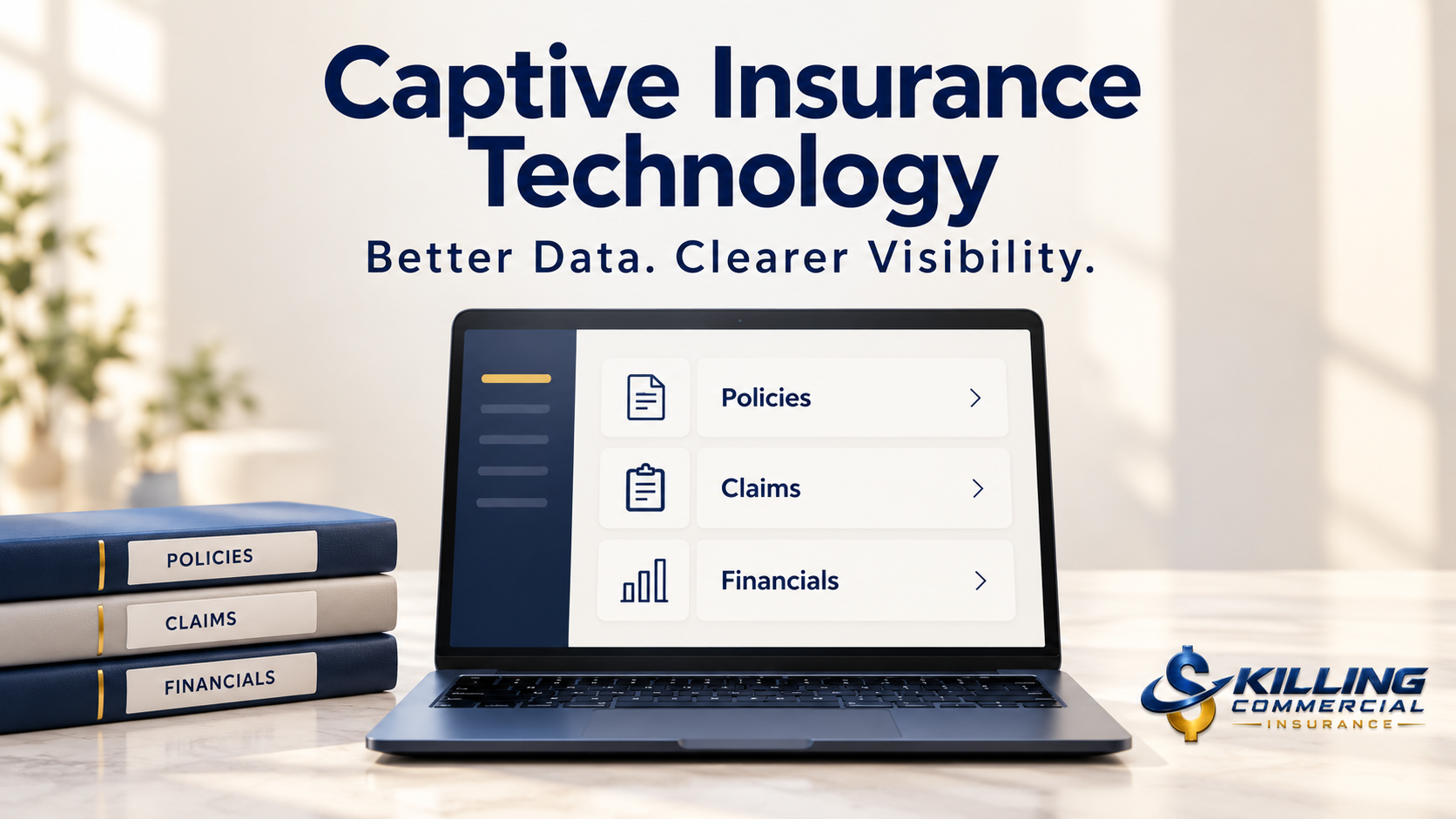
Captive insurance technology dashboard organizing policies, claims, and financial information.

A captive can have a sophisticated insurance strategy and still depend on spreadsheets that only one person understands.

Claims information arrives from one source. Financial statements come from another. Someone has to bring everything together before the owner can see what is happening.

That is where captive insurance technology becomes a practical business conversation.

In this episode of the Power Producers Podcast, David Carothers sits down with Illia Pinchuk, founder of DICEUS. Their discussion explores how captive managers and owners can improve administration, organize their data, and gain clearer visibility into their operations.

For agency owners and commercial producers, the lesson reaches beyond software. Understanding how a captive operates helps you ask better questions about the experience your clients will have after they enter one.

Different Captives Need Different Tools

Illia begins with an important distinction: captive owners and captive managers do not necessarily have the same technology needs.

Even among captives, the work can look very different.

A single captive might issue only one or two policies each year. Policy production may therefore be a small part of its workload. Claims management, financial information, and reporting could require far more attention.

A captive manager, however, may oversee many separate insurance entities. That introduces a broader set of responsibilities, including policies, endorsements, financial records, and information from outside service providers.

Cell structures add another layer because the system may need to organize information across multiple participants.

The starting point is understanding the operation.

Buying software before defining those needs can leave a business with features it rarely uses and gaps in the work that matters most.

Captive Insurance Technology Has Two Sides

During the conversation, Illia describes two related solutions: a captive administration system and a captive owner portal.

The administration system supports the work happening behind the scenes. Depending on the captive’s responsibilities, that can include policy administration, claims, rating, funding information, and the general ledger.

The owner portal serves a different purpose. It gives owners access to information and a way to make requests.

For example, Illia discusses visibility into claims, outstanding invoices, and solvency-related information. Owners may also request policy changes or endorsements through the portal.

These tools address different parts of the same relationship.

The manager needs an organized way to run the operation. The owner needs an understandable view of the information relevant to that operation.

Connecting those experiences requires structured data and the appropriate integration between systems.

Spreadsheets Can Create Dependence on One Person

One of the most practical problems discussed in the episode is reliance on a particular employee.

A spreadsheet may work because an analyst knows exactly how to use it. That person understands where the information comes from, which formulas matter, and how to resolve inconsistencies.

Everyone else sees the finished report.

The weakness becomes clear when that employee leaves or someone new must take over. The organization may still have the files, but it no longer has the same understanding of how they work.

Illia explains how structured systems can make knowledge transfer easier.

For agency owners, the parallel is familiar. A process that depends on one employee’s memory becomes difficult to teach, delegate, or repeat.

A useful question is simple: Could another qualified person follow the process without rebuilding it from scratch?

If the answer is uncertain, the business has something worth addressing.

Disconnected Systems Keep People Doing Manual Work

Illia identifies three recurring challenges: limited automation, disconnected systems, and disorganized data.

Those problems often reinforce one another.

A team might receive loss runs from a third-party administrator, financial statements from a fund manager, and policy information from another source. If those records remain separate, someone must assemble them.

That work continues even when every individual file is digital.

The opportunity is to connect the information so it can support a more consistent workflow. However, the connections must reflect how the captive actually operates.

For example, policy administration requirements will differ depending on whether the captive handles that work or a fronting carrier does.

The practical goal is to understand where information enters the process, who needs it next, and what has to happen along the way.

That gives automation a defined job.

Clean Data Comes Before a Successful Migration

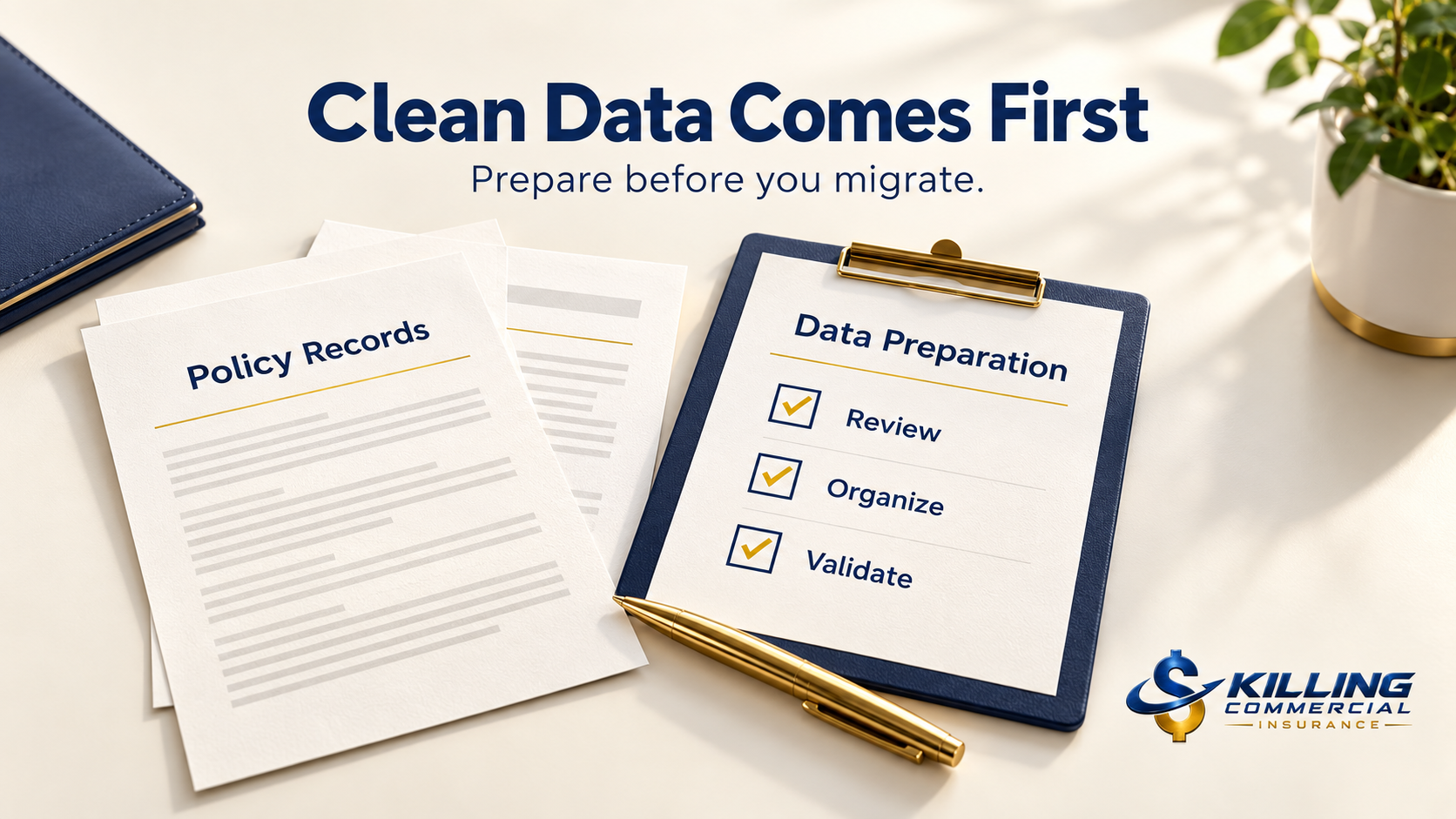
Policy records beside a checklist for reviewing, organizing, and validating captive insurance data before migration.

Moving information into a new platform does not automatically make it accurate or useful.

Illia describes data preparation as a significant part of implementation. Existing records may be incomplete, inconsistent, or organized in ways that do not translate neatly into the new system.

Someone must do that cleanup.

In one example, his team worked through legacy policies to identify and organize coverage information. That required understanding the underlying records and mapping them into a usable structure.

This is the less visible side of a technology project, but it matters.

A demonstration can show what a platform does with well-organized information. Implementation must deal with the information the business actually has.

Before evaluating a migration, managers should understand the condition of their data and who will prepare it.

Better software still needs a reliable foundation.

Fast Implementation Stories Need Context

During the episode, Illia describes a project involving roughly 30 captives where the data-loading and go-live phase took approximately two to three weeks.

The context matters: preparation and configuration happened before that stage.

That example should not become an assumption that every implementation can be completed in the same period.

The amount of cleanup, the required configuration, and the systems involved will shape the work.

David’s conversation with Illia reinforces a useful way to evaluate these projects. Ask what is included in the timeline, what must happen beforehand, and which responsibilities belong to each party.

A clear implementation plan should make those dependencies visible.

Otherwise, a business may focus on the launch date while overlooking the work needed to reach it.

Owners Need Visibility Into Their Captive

David describes the frustration of having to dig through reports to understand what is happening.

The information may exist, but finding and interpreting it can still take considerable effort.

An owner portal can help address that experience by presenting relevant information in a more accessible place.

The value goes beyond having another login. Owners need to understand what they can see, how that information supports their questions, and where to go when they need help.

Claims, outstanding invoices, and policy requests are practical examples from the conversation.

For producers, this creates a useful discussion when evaluating the client experience:

  • What information can the owner access?

  • Which requests can they submit through the portal?

  • How does the portal connect with the manager’s system?

  • What still requires a conversation with the management team?

Those questions help clarify how the relationship will function after implementation.

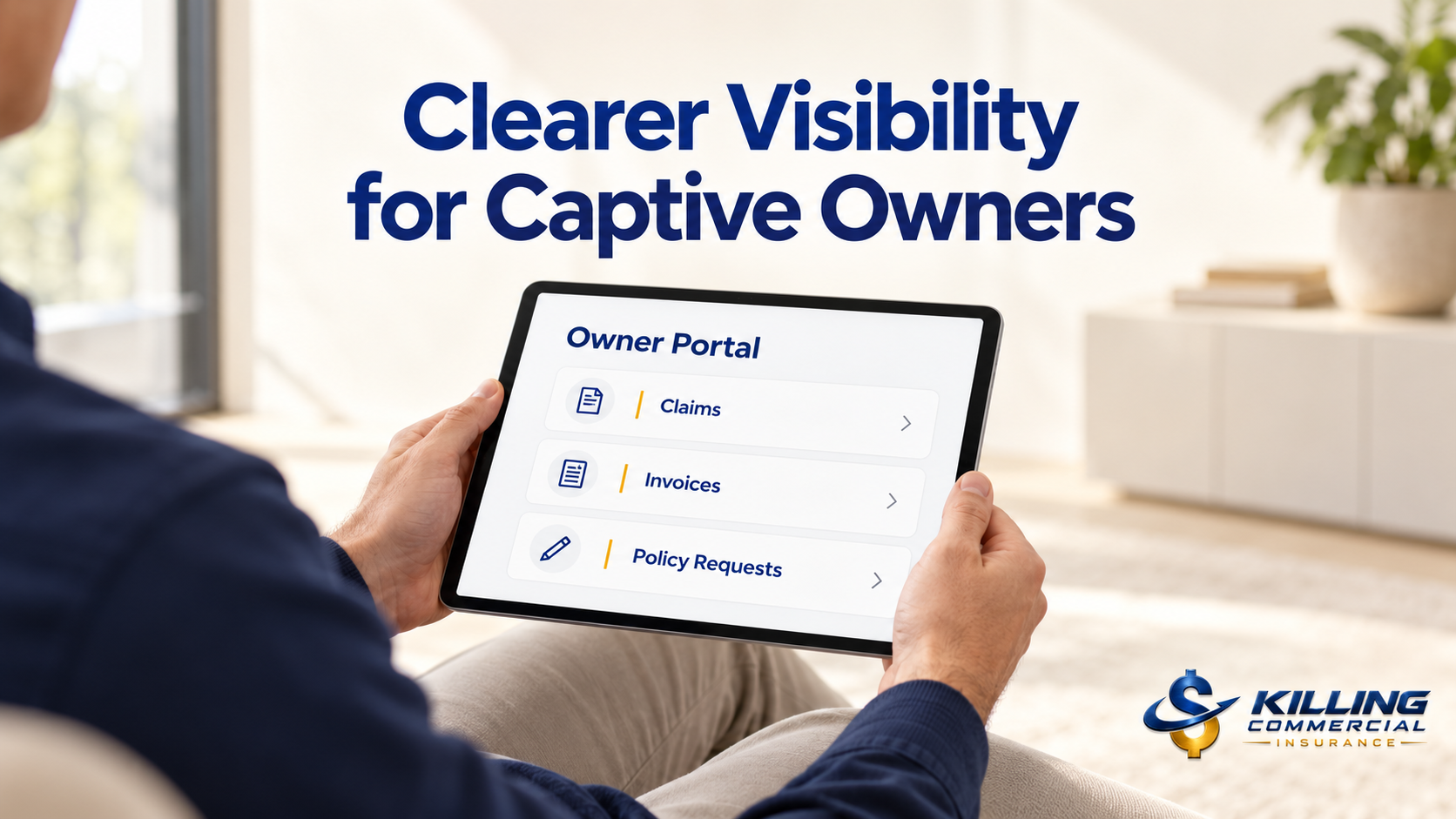
Captive owner viewing claims, invoices, and policy requests through a tablet portal.

AI Depends on the Data Beneath It

The conversation also explores the potential for artificial intelligence in captive insurance.

Illia discusses possibilities such as analyzing historical information and supporting forecasting. However, the broader message is that the underlying data must be organized first.

A business cannot skip that foundation simply because a more advanced tool is available.

If information is scattered across disconnected spreadsheets, the first challenge is bringing it into a consistent structure. Once that work is done, more sophisticated analysis becomes a more useful conversation.

This is an important distinction for agency owners evaluating technology claims.

Ask what data a tool needs, where that data comes from, and what preparation is required. Then consider whether the proposed analysis would help answer a meaningful business question.

The episode presents AI as an opportunity built on better information. It does not establish that forecasting removes uncertainty or guarantees an outcome.

Agency Owners Need to Decide Where Their Time Belongs

David brings the discussion back to a challenge many entrepreneurs recognize: trying to become an expert in every part of the business.

An agency owner can spend a great deal of time learning software development, data cleanup, or system design. Meanwhile, sales and client relationships still need attention.

Illia adds that building software internally carries responsibilities beyond the initial project. The business must also consider maintenance and the people needed to support it.

Custom development may make sense in some situations. The decision still deserves a clear understanding of the ongoing commitment.

For an owner, the practical question is whether the business should perform that work itself or bring in specialists.

That choice should reflect the organization’s capabilities and priorities.

Time spent managing a technology project has an opportunity cost, even when the project itself is valuable.

Growth Requires Workflows That Can Handle More Work

The episode connects operational efficiency with the ability to serve a broader market.

As managers consider additional captives or participants, the administrative work must remain manageable. Repeating every manual step for every new relationship can make growth harder to support.

Illia also shares a future vision of simpler digital onboarding for cell participation.

That is a direction he sees for the market, rather than a claim that captive formation already works like opening an online bank account.

The immediate lesson is more practical: examine what happens when volume increases.

Which tasks repeat? Where does information have to be entered again? How much additional work falls on the same people?

Those questions reveal whether the current process can support the next stage of growth.

Start With the Workflow You Need to Improve

The strongest takeaway from David’s conversation with Illia is that captive insurance technology should begin with a defined operational need.

A manager may need connected claims and financial information. An owner may need clearer access to reports. Another organization may need to reduce its dependence on spreadsheets maintained by one employee.

Each situation calls for a different starting point.

Illia describes a discovery process that looks at the organization’s work and identifies which modules are useful. That also means recognizing which capabilities are unnecessary.

For commercial producers, understanding these issues can improve conversations about the ongoing captive experience. For managers and owners, it provides a practical way to evaluate technology.

Start with one workflow that creates repeated friction. Identify the information it uses, the people involved, and the result they need.

Then evaluate how technology can help that work happen more consistently.

That is a concrete first step toward better data, clearer visibility, and an operation prepared to grow.

Responses

Test Message

Killing Commercial Login