
Insurance Agency Workflows: Why Process, Discipline, and Execution Still Matter More Than Technology
Buying another tool does not automatically make an agency easier to run.
A new platform can offer useful capabilities. AI can accelerate research, organize information, and help document procedures. However, those advantages depend on whether the agency understands the work it wants to improve.
Without that foundation, technology can become another expense that never quite delivers what the team expected.
Effective insurance agency workflows begin with a clear process, defined responsibilities, and consistent execution.
In this episode of the Power Producers Podcast, David Carothers welcomed Ryan and Sean, two of the founders of Glovebox, to discuss that connection.
The conversation covered AI, business planning, agency culture, client self-service, and technology implementation. David also shared why Florida Risk Partners had begun introducing its branded app through Glovebox.
One principle connected the discussion:
Technology creates more value when the agency knows what needs to happen and helps its people and clients use it.
Keep the Agency’s Core Business in Focus
The episode opened with a concern about the attention surrounding AI.
Ryan and Sean described conversations with agency owners who felt pressure to adopt something quickly. They knew other agencies were experimenting, but they were not always clear about what their own businesses needed.
David challenged that mindset.
An agency owner’s responsibility is to build a successful insurance operation. Learning about technology can support that responsibility, but constantly chasing new tools can also distract from it.
The useful question is what the technology will help the agency accomplish.
Will it simplify an existing task? Could it improve access to service? Does it help the team prepare for better sales conversations?
Those questions give the evaluation a purpose.
By comparison, adopting a tool because another agency uses it provides little direction for implementation.
Start with the business problem. Then determine whether technology can help solve it.
That approach keeps attention on selling, servicing, and improving the client relationship.
Document Insurance Agency Workflows Before Automating Them
David compared the current interest in AI with the earlier rush to hire virtual assistants.
Some agencies hired help without documenting what that person should do. As a result, the new employee arrived without clear instructions or a reliable process to follow.
The agency became frustrated, and the arrangement failed.
The same problem can affect automation.
If the team cannot explain how a task should move from beginning to end, it will struggle to configure technology around that task.
David described the work Florida Risk Partners completed while building its personal lines operation and preparing related small commercial workflows.
The starting point was simple: pens, legal pads, and detailed conversations about how the work should happen.
He acknowledged that documenting processes was not his favorite responsibility. Nevertheless, it was necessary before the agency could support more volume.
For agency owners, the lesson is direct.
A workflow needs to be understood before it can be delegated, taught, or automated consistently.
That means identifying the steps and clarifying what the team is trying to accomplish.
Use AI to Help Capture the Process
The discussion offered a practical place to begin using AI: documenting work the team already performs.
One approach was to record an employee completing a task while explaining the steps aloud. A recording tool such as Loom or Zoom could capture the demonstration.
The transcript could then provide material for an AI-assisted procedure draft.
This gives the employee something concrete to review instead of asking them to write the entire process from a blank page.
The group also discussed comparing recordings from several service team members.
If multiple employees handle the same request differently, those recordings can reveal variations worth examining. The team can then consider which approach works best and where unnecessary steps exist.
The output still needs review before becoming the agency’s standard.
A useful procedure should reflect the actual work, including decisions that require judgment or additional information.
AI can help organize the explanation. The agency still needs to decide what the approved process should be.
Once that foundation exists, the team has a better basis for identifying bottlenecks and evaluating automation.
Give Producers a Business Plan They Can Use
The conversation also connected technology decisions to business planning.
David explained that business planning comes first in Killing Commercial. Producers need to think through what they want to build before selecting tactics or filling their calendars with activity.
Making calls and attending meetings can create movement. A plan gives that movement a direction.
During the episode, the group discussed using AI to help develop an initial business plan and explore questions about growth, staffing, and future capacity.
David also described using carrier appetite information and industry codes to support research for a specialized insurance venture.
Those examples illustrated how AI can help organize research and expand the questions a producer considers.
The resulting plan still needs to reflect the agency’s actual resources and market opportunities.
David emphasized reviewing the plan and making adjustments over time.
A business plan becomes useful when it guides decisions and receives regular attention.
It should help the agency determine where to focus, what support it needs, and which technology investments fit that direction.
Measure Progress Against Your Own Starting Point
Ryan and Sean shared a theme from a recent agency team event: run your own race.
That idea applied directly to technology adoption.
Another agency may have different clients, staffing, resources, or growth goals. Its preferred tool may solve a problem your agency does not have.
David extended the point to how producers evaluate performance.
He described comparing his progress with his own previous results rather than constantly measuring himself against other agencies.
The discussion also raised a useful question: compared to what?
An agency may believe its service is excellent. However, that statement becomes more useful when the team defines what it means and how it evaluates improvement.
For example, an agency applying this principle could examine whether clients can complete routine requests more easily than before.
That is a practical application of the conversation, rather than a performance result reported in the episode.
Define improvement in terms that matter to your operation and your clients.
A clear starting point makes it easier to judge whether a new workflow actually helps.
Build a Culture That Supports Execution
The group spent part of the episode discussing agency leadership and the willingness to keep learning.
They described successful owners who continued attending educational events, taking notes, and looking for ideas they could apply.
Their size had not removed the need to improve.
David connected that behavior to intentional culture. Leaders need to define how they want the agency to operate and demonstrate those expectations through their own actions.
That matters when introducing a new process.
Employees watch whether leadership participates, follows through, and treats the change as a priority. A system receives a different response when the owner actively supports it.
The discussion also emphasized humility.
Remembering the earlier stages of building a business can help leaders appreciate progress without assuming they have finished learning.
Consistent execution becomes easier when learning and participation are visible expectations throughout the agency.
Technology can support that culture, but leadership has to establish it.
Treat Implementation as Part of the Purchase

David addressed the mixed feedback he had heard about Glovebox from other agencies.
He encouraged listeners to evaluate a product’s present capabilities rather than assume an earlier experience tells the entire story.
Ryan and Sean also acknowledged mistakes in their early approach.
They had underestimated the effort required to help agencies implement the product and change established habits. Seeing the potential of a platform did not mean every agency would know how to put it into practice.
That admission connected directly to the episode’s broader theme.
Buying access is only one step.
The team still needs to understand the system, follow the implementation process, and incorporate it into daily work.
At the time of the recording, David had recently launched Florida Risk Partners’ app. He praised the onboarding experience and discussed what he hoped to accomplish next.
Those comments described an early implementation experience, rather than established long-term results.
The value of a technology purchase depends in part on what happens after the agreement is signed.
Examine Service from the Client’s Side
Ryan and Sean encouraged agencies to look at their websites as customers.
What happens when someone needs help outside office hours?
A website may display a phone number prominently. Yet if that number leads to voicemail, the client may still have no clear way to move forward.
The group used buying a vehicle as an example.
A customer may be at a dealership in the evening or on a weekend. They need information or assistance, but they may not remember which carrier holds the policy or how to access the right documents.
That situation exposes several points of confusion.
The agency’s internal process may make sense to employees while leaving the customer unsure where to begin.
Improving insurance agency workflows therefore requires looking beyond the staff’s experience.
Can the client find the appropriate resource? Is the next step clear? Do they understand whether they are retrieving information or submitting a request that needs further handling?
Convenience begins with helping the client understand what they can do and how to do it.
Demonstrate Service Instead of Making Broad Claims
The group discussed how frequently agencies promote the same benefits: good service, competitive pricing, and strong coverage.
Those statements alone give a prospect little basis for comparison.
A specific example is easier to understand.
David described using a certificate portal to address a problem for contractors who struggled to obtain certificates when they needed them.
At first, he associated good service with personally guiding clients through every task. His experience with the portal changed that view.
Some clients valued the ability to complete routine work without waiting for a phone conversation.
David then began introducing that capability during sales discussions.
Rather than relying on a general service promise, he asked prospects about their certificate process and explained how his agency could address a relevant frustration.
A useful differentiator connects a capability to a problem the buyer recognizes.
That principle can guide both technology selection and the way producers explain the agency’s value.
Free the Team to Handle More Valuable Conversations
David discussed testing an AI phone attendant and exploring how intake could connect with service and new-business workflows.
His stated goal was to reduce interruptions and give the team more time to drive business.
He also made clear that no single platform would solve every agency need.
That perspective creates a more realistic way to evaluate automation.
Some tasks are repetitive. Others require a conversation, a decision, or a closer understanding of the client’s situation.
A useful workflow helps route work appropriately and makes the next step clear.
The discussion also recognized that client preferences differ.
Some people want to complete a simple request quickly. Others want to talk with someone who knows their account.
Supporting routine self-service can create more room for the conversations where personal attention matters.
The purpose of efficiency is to improve how the agency uses its people’s time and serves its clients.
Connect Account Rounding to an Intentional Process
David shared how Florida Risk Partners developed relationships through monoline umbrella business.
The agency initially had limited access to other personal lines markets. However, it recognized that these smaller policies could introduce clients who might later need home and auto coverage.
Over time, the agency built the processes and carrier relationships needed to pursue those additional opportunities.
David also described creating referral forms for solar sales partners.
Those forms simplified the handoff and helped the agency track where referrals originated. The relationships eventually created opportunities to discuss commercial insurance with the solar businesses themselves.
The example showed how a small initial transaction can fit into a broader plan.
The group then discussed a client app as a digital place where customers could discover other services and begin a conversation.
David expressed enthusiasm about that possibility for his agency. It was an intended benefit of the rollout, not a measured result at that stage.
Account rounding works better when the agency creates a clear path from the first relationship to the next relevant discussion.
Make Client Onboarding Part of the Workflow
A client cannot benefit from a tool they do not understand or use.
David described an existing follow-up call in which Grayson confirmed that a premium payment had been received and thanked the customer for choosing the agency.
He saw that conversation as a natural opportunity to introduce the app.
The proposed next step was practical: remind the client about the download link and offer to stay on the phone while they completed the setup.
That approach gives onboarding a place within an established interaction.
It also explains why the client should care.
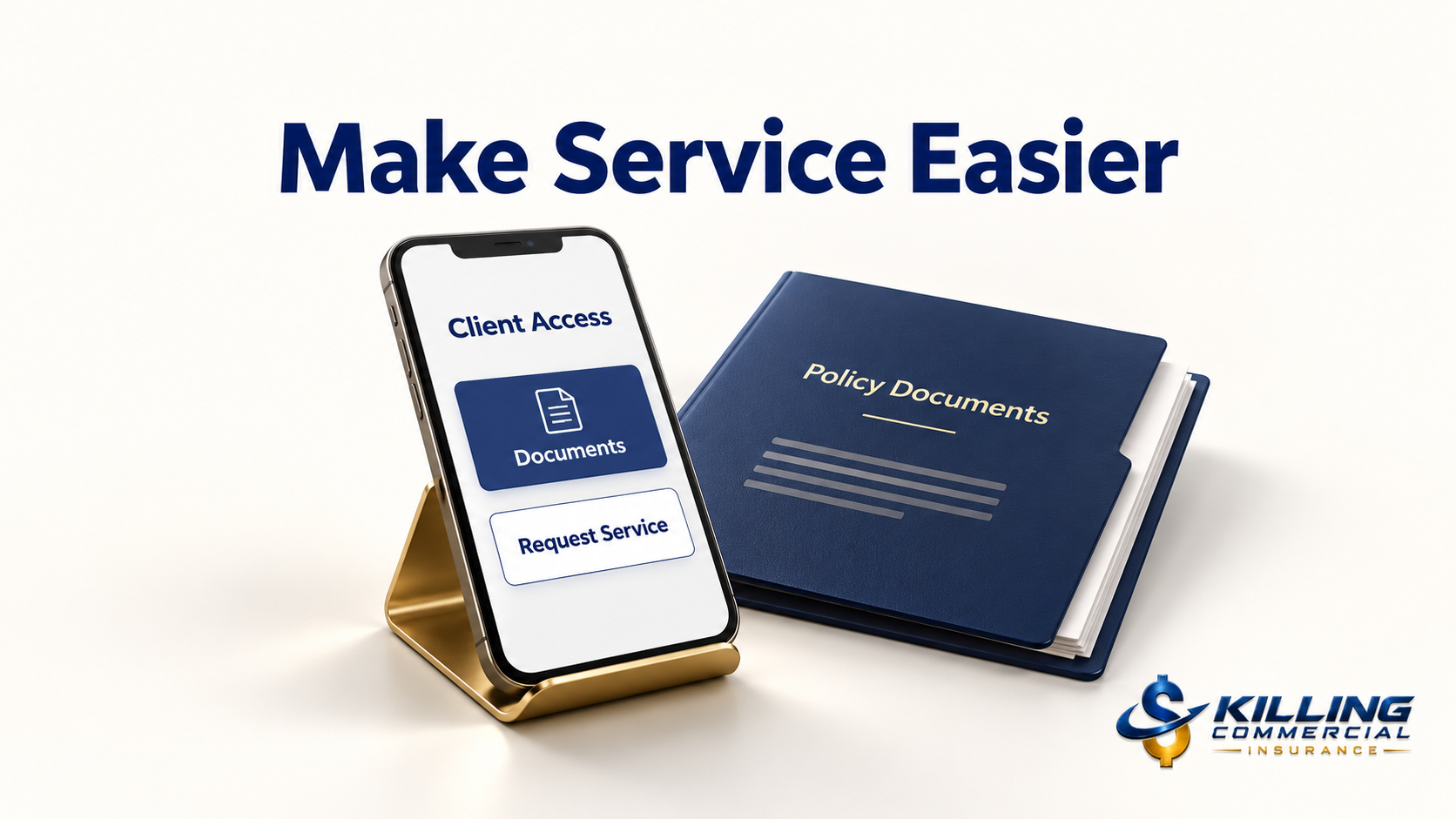
Instead of simply announcing that the agency has an app, the employee can show how it helps the customer access information and request service.
For agency leaders, the broader question is where adoption fits into the process.
If a tool matters to the client experience, introducing it should be a deliberate part of that experience.
Build Insurance Agency Workflows Around Purposeful Execution
David, Ryan, and Sean’s conversation began with technology, but its most useful lessons concerned how agencies operate.
Document the work before trying to automate it. Give producers a plan that guides their activity. Evaluate service from the customer’s perspective.
Then commit to implementation and help clients use the capabilities the agency has chosen.
AI and client-facing platforms can support that work. Their usefulness depends on the problems they address and the effort behind their adoption.
For producers, the opportunity is to spend more time on informed conversations and meaningful follow-through.
For agency owners, the responsibility is to create the conditions that make that possible.
Start with one recurring task. Document how it works, identify where employees or clients get stuck, and improve that process. Then evaluate the technology that can help your team execute it consistently.

Building a Data-Driven Insurance Agency: Premium Is for Show, Revenue Is the Dough
An agency can write more premium and still struggle to understand whether the business is becoming more profitable. Premium volume tells part of the story.

Insurance Intake Automation: How Better Data Creates Better Client Conversations
A prospect agrees to talk about insurance. Then the work begins: locating declarations pages, answering questions, sending documents, and repeating information that already exists somewhere

Value-Based Selling in Insurance: How Guffy Wright Creates Client Alignment
Guffy Wright thought he had presented an offer that would be difficult to refuse. His insurance proposal was approximately $2 million less expensive, and he

Leadership Skills for Insurance Producers: Building Confidence, Making Better Decisions, and Understanding People
Sitting in a prospect’s parking lot, David Carothers started questioning whether he belonged inside the building. The company was a significant opportunity. Its operations were

Commercial Insurance Prospecting: How Better Data Creates Better Producers
A renewal date tells you when to call a business. It does not necessarily tell you why the owner should take the call. That difference

Relationship Building in Sales: The Human Advantage in the Age of AI
A baseball card tucked inside a thank-you note would be easy to overlook. For Patrick Galvin, it became a reason to return to a mortgage
Responses