If you’re like most producers, you’re probably operating off of a sales funnel. Guess what? That’s more than likely half your problem. You’re going to think I’m nuts, but I promise you I’m not. That’s what we’re going to talk about in today’s article.
You Need a Sales Cylinder NOT a Sales Funnel
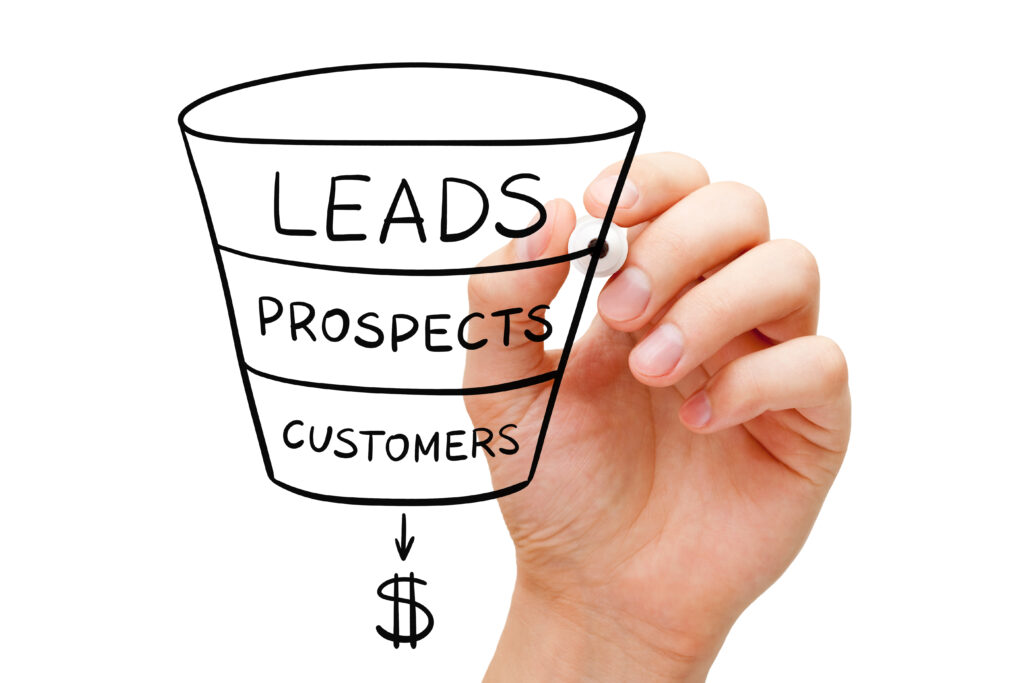
So here’s the thing. I don’t believe in funnels. Well, I mean, I do. I believe in funnels. I know they exist, and I know there’s a lot of my competition, and even people that come into our program are using them. But here’s the problem with the funnel. It’s a funnel! How much time is wasted by operating from a funnel? A lot. The truth is if you want to be useful as a salesperson, you don’t need a sales funnel. You need a sales cylinder! How’s that happen? Well, it’s real simple. You have to take the time to make sure you’re not putting garbage in there. The reason funnels exist is because we’re throwing everything under the sun into the top end of that thing, and by the time it gets weaned out, it has a deep cut V.
How do You Create a Sales Cylinder?
Take the time ahead of time to make sure that you’re only putting those prospects in that fit your ideal prospect profile. Opportunities you’ve researched to qualify or disqualify, and make sure that they fit 100% of what your objectives are. Then you’re going to have yourself a sales cylinder. It’s no longer a sales funnel. See until agencies can figure out how much time they’re actually wasting on the front end instead of investing that time wisely, they’re going to operate out of that deep cut V continuously, and guys like me are going to go in and be able to kill them on the streets.
Why Does the Sales Cylinder Work?
The reason why is because while they’re screwing around calling on leads and following up on things that we’re never going to buy from them, the quality of stuff in my sales cylinder is leading me to a 99% close rate. Does it take me a little more time to figure out what I’m going to put in there? Absolutely. However, I close way more than the average agency because I invest that time. Who wins at the end of the year? What if you’ve generated $100,00 worth of revenue, and I have made $500,000? That’s up to you to decide. My challenge to you is, spend time, spend time on the front. You have plenty of time right now that you can be qualifying and disqualifying leads before you ever attempt to make them suspects, prospects, or clients.
Prequalify Everything
Spend time refining what the different stages are in your sales process. But most importantly, don’t just throw everybody in there. There’s no point. Some people you waste your time on are never going to buy from you. Cut bait and move on. Yeah, I get it. We’re all under pressure to produce, but why put ourselves under that pressure, and if we are, put ourselves under the weight of closing accounts that we know we can close. People who need us, people who fit the demographic that we desire. If you can do that, if you can slow down in your prospecting and you can prequalify every single person before you allow them to get in the top end of that funnel, you’re going to find out that funnel is not a funnel anymore. You have yourself a sale cylinder. You’re going to kill it in commercial when that happens.
Winning an account should start a longer conversation about the client’s business. Too often, however, the relationship settles into a familiar routine. The producer places
A completed cyber application tells you what a business says about its security. The next question is whether the evidence supports those answers. That distinction
An agency can add technology and still leave its people buried in administrative work. Applications need information. Submissions require documents. Email threads contain details that
A large points balance does not automatically mean you have a strong rewards strategy. Business owners often know how many points they have accumulated. Fewer
Your reputation starts forming before a prospect meets you. A LinkedIn profile, a website photo, or an article can shape someone’s first impression of your
A full calendar can hide a poorly qualified pipeline. Producers spend weeks chasing prospects, preparing presentations, and following up on conversations that never had a
Please note:
This action will also remove this member from your connections and send a report to the site admin.
Please allow a few minutes for this process to complete.







Responses