
Last Updated on: January 6, 2026

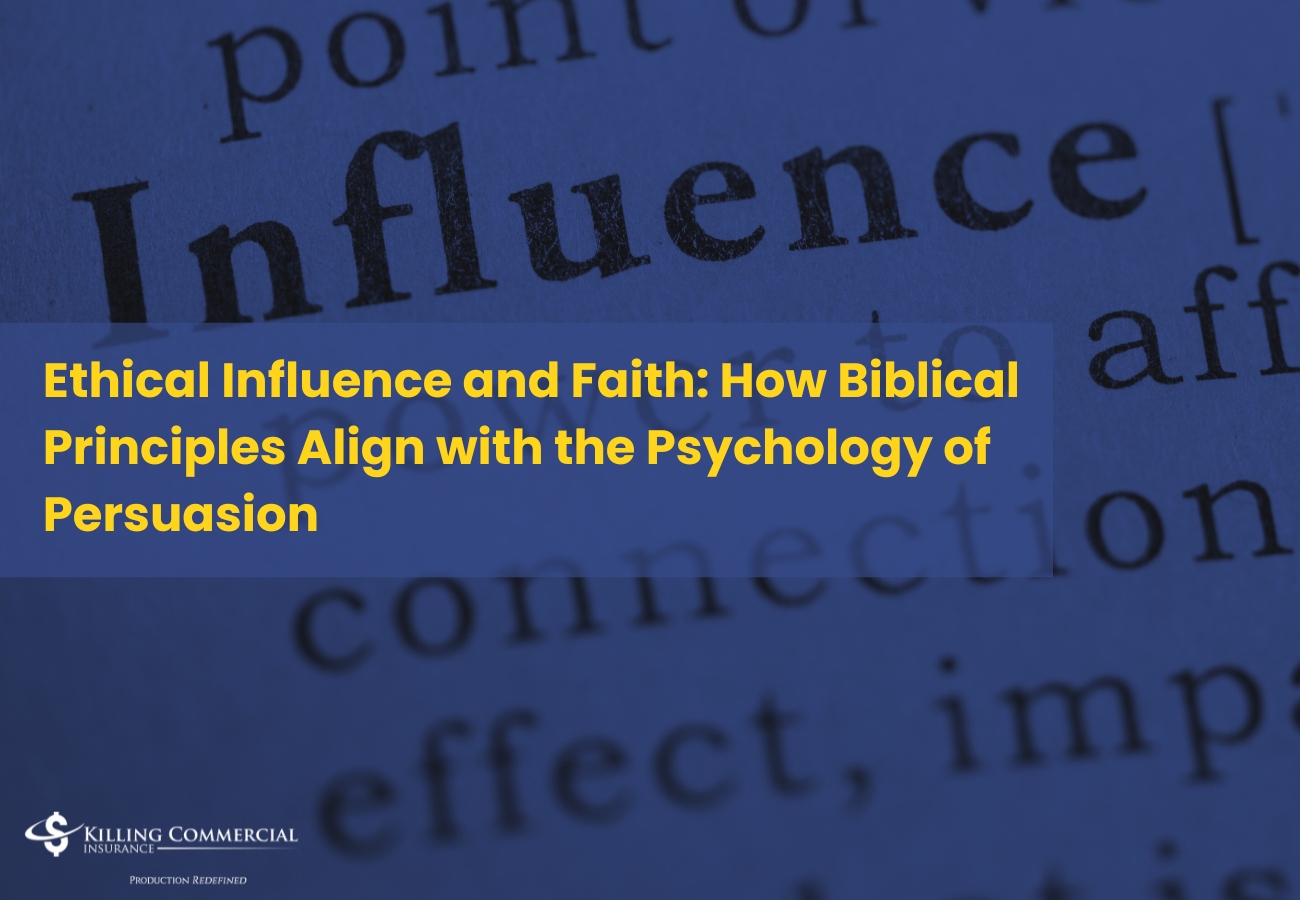
Ethical Influence and Faith: How Biblical Principles Align with the Psychology of Persuasion

Ethical

Influence is one of the most powerful tools we have in business, leadership, and personal life. Used well, it inspires people, builds trust, and creates ethical results. Used poorly, it can slide into manipulation and self-interest.

In a recent conversation on the Power Producers Podcast, I sat down with Brian Ahearn, keynote speaker, author, and one of only a handful of people globally certified under Dr. Robert Cialdini, the leading expert on influence. Brian has written multiple books on the subject, but his newest release, Influence From Above: Where Faith and Influence Meet, takes a unique direction.

Unlike his prior works, this book is written in a novel style, weaving together biblical principles with the psychology of persuasion. It is not just a teaching manual but a story-driven exploration of how influence, when rooted in faith and ethics, can shape both business outcomes and community impact.

Why Influence Matters More Than Ever

In today’s world, influence is often misunderstood. Too many people equate persuasion with manipulation—something pushy salespeople or politicians use to get their way. But the truth is that influence is neutral. Like money or technology, it’s a tool. What matters is whether we wield it with integrity.

For leaders, sales professionals, and even faith-based communities, understanding influence is crucial. Every day, we’re influencing—whether we’re convincing a client to take action, guiding a team through change, or inspiring a congregation to rally behind a mission.

What Brian makes clear is that influence done ethically is not about taking advantage of others. It’s about creating value, building trust, and ensuring that both parties benefit. In an industry like insurance, where relationships are everything, this distinction is the difference between a quick sale and a lifelong client.

The Cialdini Principles and Their Biblical Parallels

At the heart of Brian’s work are the six principles of influence identified by Dr. Robert Cialdini. What makes Influence From Above so fascinating is how Brian connects these psychological principles to biblical teachings.

  • Reciprocity – The principle that when we give, others feel an obligation to give back. The Bible echoes this in “Do unto others as you would have them do unto you” and “It is more blessed to give than to receive.”
  • Scarcity – People value things more when they are rare or limited. Spiritually, this reflects the urgency of opportunities not to be missed, from service to salvation.
  • Authority – We naturally follow the lead of credible experts. Scripture often highlights the importance of wisdom, mentorship, and spiritual guidance.
  • Liking – We are more easily persuaded by people we genuinely know and like. Brian pushes this deeper: when practiced authentically, liking leads toward love—the greatest biblical commandment.
  • Social Proof – People look to the behavior of others to guide their own. Communities of faith mirror this by modeling collective action, shared values, and mutual support.

By aligning Cialdini’s research with biblical truths, Brian helps readers see influence not as manipulation, but as a reflection of values many already hold dear.

The Three Pillars of Ethical Influence

Ethical

One of the most powerful parts of the conversation was Brian’s framework for ethical persuasion. He breaks it down into three must-haves:

  1. Always tell the truth—and never hide the truth. It’s not enough to avoid lying; ethical influence requires transparency.
  2. Only use principles natural to the situation. Don’t invent false scarcity or fake social proof. Influence works best when it’s authentic.
  3. Strive for win-win outcomes. Any proposal must be good for both sides. If it’s only good for you, it’s not ethical.

For producers in the commercial insurance industry, these principles are critical. Whether you’re advising on workers’ compensation, negotiating coverage, or helping a client through claims, ethical influence builds the kind of trust that sustains relationships for decades.

Writing With Purpose — Lessons from Brian Ahearn

Brian’s new book is his fifth, and each one has had its own purpose. Some were written to establish credibility as a speaker. Others were tailored to insurance professionals. Influence From Above is different: it’s deeply personal, combining his expertise in psychology with his faith.

The format is also unique. Instead of a textbook approach, Brian uses storytelling in a novel format. Each chapter ends with reflection questions, inviting readers to pause, consider, and apply the lessons in their own lives.

The process of writing has changed too. In the past, publishing a book required endless rounds of edits and back-and-forth with editors. This time, Brian leaned into modern tools like ChatGPT, which acted like a real-time editor—helping him refine chapters, check consistency of characters, and streamline the writing timeline. What once took years now took only a few months.

For content creators, sales leaders, or anyone looking to share their message, this is a reminder: technology doesn’t replace authenticity, but it can accelerate the process of getting your ideas into the world.

The Power of Character and Authenticity

Throughout the conversation, one theme kept coming back: authenticity. Influence isn’t about clever tricks or rehearsed scripts. It’s about character.

Brian quotes Aristotle: “Character may almost be called the most effective means of persuasion.” Two people can say the same words, but one will be more persuasive because their integrity, tone, and genuine care shine through.

I added my own reflection during the podcast: “Be who you are, and the people that are supposed to be in your circle will find their way there.” Authenticity attracts the right audience. It’s the same in sales, leadership, and faith.

In a world where social media often fuels division, comparison, and artificial images, authenticity is more powerful than ever. Influence rooted in consistency and genuine care cuts through the noise.

Key Takeaways for Leaders and Producers

Ethical
  • Influence is relational, not transactional. Long-term trust matters more than short-term wins.
  • Faith and persuasion are aligned. Biblical principles reinforce the psychology of influence.
  • Ethical frameworks simplify decisions. Always tell the truth, use principles authentically, and aim for win-win results.
  • Character drives credibility. People follow leaders they believe in, not just leaders with titles.
  • Technology is a tool, not a replacement. Use it to streamline your process, but never sacrifice authenticity.

Resources and Next Steps

If you want to explore Brian Ahearn’s work further, visit InfluencePeople.biz. You’ll find resources, speaking opportunities, and updates on Influence From Above.

Brian also offers a special promotion: if you purchase or receive the new book and email the title of Chapter 2 to [email protected], he’ll send you a free digital copy of The Influencer, the prequel novel.

For readers in the insurance industry, this is more than a book—it’s a guide to building credibility, trust, and long-term client relationships in a way that aligns with your values.

Final Thoughts

Influence doesn’t have to feel manipulative. It doesn’t have to be about power plays or persuasion tricks. Done right, influence is about serving others, building trust, and creating lasting impact.

What Brian Ahearn shows in Influence From Above is that the principles of psychology and the principles of faith don’t just coexist—they strengthen each other. When we lead with character, when we give before we expect to receive, and when we use persuasion ethically, we move beyond transactions and into transformation.

Whether you’re a sales producer, a leader in your community, or someone seeking to grow in your faith, ethical influence is one of the most valuable skills you can develop. And as Brian’s journey shows, it can take you further than you ever imagined—sometimes all the way around the world.

Insurance

From Med Device to Middle Market: Lessons on Sales, Risk Management, and Reinventing Yourself in the Insurance Industry

Reinvention is one of the most powerful themes in the insurance industry. Some of the best commercial producers in the country did not grow up wanting to sell insurance. They did not study risk management in college. They did not come from an agency family. They found this industry after they tried something else. They found it after life pushed them toward a career where performance, autonomy, and mindset determine the outcome.

Read More »

From Executive Leadership to Field Underwriting: Lessons Producers Can Learn from Aaron Puchbauer’s Transition into Middle-Market Insurance

The most successful producers in the middle market did not get there because they quoted faster, smiled bigger, or knew how to talk longer. They got there because they learned how to differentiate themselves so clearly that prospects had no choice but to see them as trusted advisors. They learned to operate like businesspeople first and insurance technicians second. They learned how to tie operational mechanics to insurance outcomes. They learned how to control their time, their pipeline, and their future.

Read More »
Commercial

From Newcomer to Contender: What Commercial Insurance Producers Can Learn from Pam Seidler’s Middle-Market Journey

The commercial insurance industry is one of the few professions where someone can enter with no experience, no connections, and no background in risk management and still build a long, lucrative career. But success is never automatic. It requires hunger, humility, curiosity, and the willingness to keep showing up even when the process feels overwhelming. That is why the story of Pam Seidler has already started making waves among new and aspiring commercial producers.

Read More »
Insurance

How AI and Automation Are Reshaping Independent Insurance Agencies

In an industry where tradition often outweighs innovation, artificial intelligence and automation are slowly but steadily reshaping how independent insurance agencies operate. The push toward smarter, more efficient workflows is no longer a matter of if—but when. While many agencies are still evaluating how AI fits into their operations, early adopters are already reaping the benefits of streamlined submissions, faster processing, and actionable data insights.

Read More »

Responses

Test Message

Killing Commercial Login