
Commercial Insurance Prospecting: Lowering Resistance, Asking Better Questions, and Using AI with Josh Braun

A full calendar can hide a poorly qualified pipeline.
Producers spend weeks chasing prospects, preparing presentations, and following up on conversations that never had a compelling reason to continue. Meanwhile, the pressure to book another meeting makes it harder to recognize when an opportunity does not fit.
Commercial insurance prospecting becomes more useful when the first objective is to determine whether a meaningful problem exists.
In a recent episode of the Power Producers Podcast, David Carothers sat down with Josh Braun to explore that shift. A familiar voice in the Killing Commercial community and a previous Producers in Paradise speaker, Josh brought a clear perspective on sales resistance, discovery, and detaching from the outcome.
Their conversation also examined how AI can help producers refine content and communicate more clearly without surrendering their judgment or personal voice.
The central question was simple:
Is there a problem here?
A producer willing to hear either answer can approach the conversation with a different level of curiosity.
Your Intent Shapes the Sales Conversation
Josh challenged a familiar assumption behind outbound sales: the salesperson’s job is to persuade whoever answers to book a meeting.
When that becomes the objective, every response can start to look like an obstacle.
An existing relationship becomes something to challenge. A lack of interest becomes something to overcome. Even a clear mismatch can trigger another attempt to keep the conversation alive.
Josh’s point was that the intent behind the call influences how the salesperson behaves.
A producer who needs the appointment may explain too much, push too quickly, or stop listening for information that would disqualify the opportunity.
By comparison, someone trying to understand the prospect’s current situation has room to ask a question and consider the answer.
That does not mean abandoning preparation or business development goals. It means entering each conversation without assuming the prospect needs what you offer.
Your production goal does not establish that this particular business has a reason to change.
Discovery needs to establish that connection.
Commercial Insurance Prospecting Starts with the Current Approach
One of Josh’s strongest observations was that prospects already have a way of getting the job done.
They may use a vendor, an internal employee, a manual process, or a combination of approaches. Whatever the arrangement, they are operating with something in place today.
For commercial producers, that is especially relevant.
Most established businesses already have insurance and an agent. Announcing that you sell commercial coverage provides little reason for the owner to reconsider the current relationship.
The more useful starting point is understanding how the business handles a specific responsibility.
During the episode, Josh illustrated this with a question about how a plumbing company handles after-hours calls. Before discussing an AI dispatcher, he would want to know whether the company uses an answering service, text messages, or another solution.
The answer determines where the conversation goes.
An insurance application of that principle might involve asking how a business reviews open claims or tracks subcontractor insurance documents. These are examples of applying Josh’s approach, rather than questions quoted from the episode.
The purpose is to understand the existing process before suggesting an improvement.
Ask Questions That Leave Room for an Honest Answer
Josh described his approach as “poking the bear.”
The phrase refers to drawing attention to a potential problem the prospect may not have considered. However, the question needs to leave open the possibility that the problem does not exist.
That is an important distinction.
A question built to force agreement can feel like a pitch with a question mark attached. The prospect senses that the salesperson has already decided where the conversation should end.
Josh contrasted neutral discovery with language such as, “If I could do this, would you be interested?”
That construction can lead the buyer toward an expected answer without revealing much about the current situation.
A more useful question explores what happens today.
For example, a producer might ask:
- How do open claims get reviewed between renewals?
- Who checks subcontractor insurance documents before work begins?
- What happens when an employee reports an injury after hours?
These illustrative questions focus on processes rather than presumed failures.
The follow-up should depend on the answer. If the prospect describes an effective approach, acknowledge it. When something remains unclear, ask for more detail.
A neutral question only works if you are willing to accept an answer that does not support your sale.
A Helpful Cold Call Does Not Always Produce a Meeting
Josh shared a cold call he received from a salesperson representing a payment-recovery service.
She knew he sold courses and asked how he recovered payments when a customer’s credit card failed. Instead of beginning with a presentation, she named several possible ways he might handle the issue.
Josh explained that he used Stripe.
The salesperson then explored whether he regularly checked failed payments. When he said he did not, she offered instructions for reviewing them. If the review revealed a meaningful problem, they could continue the conversation.
Josh checked and discovered that he did not have the issue.
There was no need for a meeting.
That outcome was central to the story.
The salesperson helped him evaluate a possible problem without requiring an appointment first. She also avoided spending additional time pursuing a prospect who did not need the service.
David recognized the qualification value immediately. The prospect received something useful, while the salesperson created a practical way for a suitable buyer to identify a reason to reengage.
A conversation can succeed by establishing that there is no reason to continue.
For producers, that can be difficult to accept when activity targets emphasize appointments. Nevertheless, an unnecessary meeting consumes time on both sides.
Not Every Response Is an Objection
Josh used a deliberately simple example to expose another sales habit.
Imagine selling grass-fed beef and hearing that the prospect is vegan.
A salesperson focused on converting everyone might immediately search for a rebuttal. Yet the response describes a fundamental mismatch.
Recognizing that mismatch protects time and preserves the interaction.
In commercial insurance, the situations are usually more nuanced. A prospect may have an effective process, different priorities, or needs outside the agency’s capabilities.
Those circumstances deserve investigation when appropriate. They do not automatically require persuasion.
Josh also challenged how salespeople interpret “We have a vendor for that.”
In his view, the statement describes the current situation. It does not establish whether the arrangement works well or whether a meaningful gap exists.
For a producer hearing “We already have an agent,” the next step is to understand the relationship and relevant processes, provided the prospect is willing to discuss them.
The existing agent is part of the context. There still needs to be a legitimate reason for further conversation.
Let Buyers Discover What Matters to Them
Josh’s running-shoe story illustrated how a useful question can create interest without a conventional pitch.
He entered a store without intending to replace his shoes. A sales associate noticed that he was a runner and asked whether he was training for a race.
After learning about his plans, she asked whether he had completed a running gait assessment.
That question introduced something he had not considered. The assessment and subsequent discussion gave him a reason to evaluate his current shoes, and he ultimately made a purchase.
The sales lesson is in the sequence.
The associate began with his activity and goals. Only then did the conversation move toward whether his existing equipment suited his needs.
For an insurance producer, the parallel is to understand the business before explaining the agency’s services.
A claims-review process, training resource, or risk-management service becomes more relevant when the buyer connects it to a concern they recognize.
The producer can help reveal a question worth investigating. The buyer determines whether the issue matters enough to act.
Price Conversations Need Better Comparisons
Josh shared another example from a home renovation project.
A recommended contractor’s bid came in approximately 15% higher than competing bids. When Josh raised the difference, the contractor asked permission to explore what the other proposals included.
He asked about materials and construction details Josh had not compared.
Those questions helped Josh recognize that the proposals were not necessarily equivalent. After reviewing the differences, he chose the higher-priced contractor.
The contractor did not need to rely on a generic claim of superior quality.
Instead, the conversation made the comparison more specific.
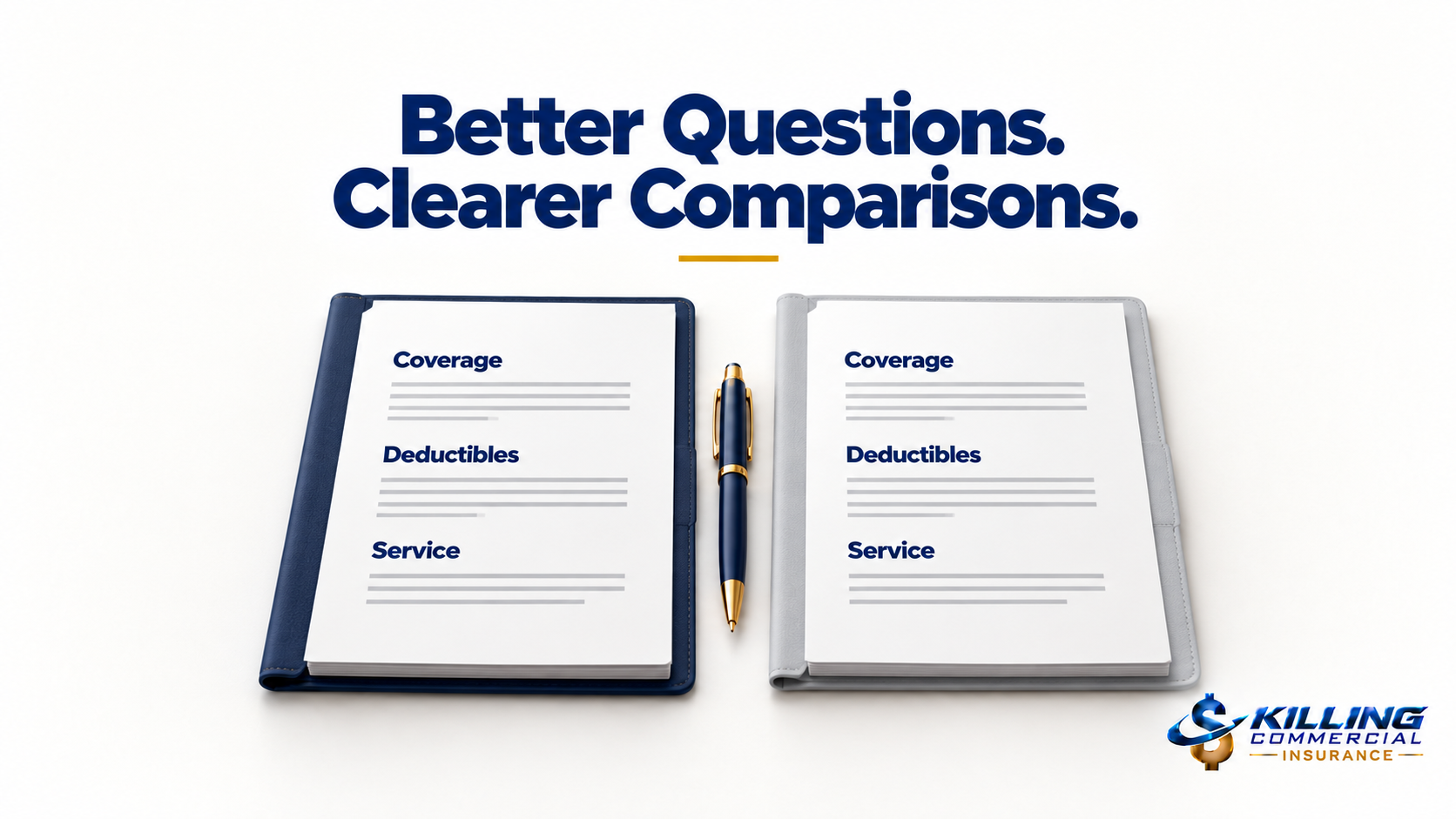
That principle has a practical application in commercial insurance. Before discussing whether one proposal costs more, the producer needs to understand what the buyer is comparing.
Limits, deductibles, coverage terms, and service commitments can become discussion points when they are relevant and supported by the actual proposals.
This is an application of the episode’s sales lesson, rather than a claim that a higher premium necessarily buys a better solution.
A difference only creates value when it matters to the buyer.
Some prospects will understand a distinction and decide it does not justify a change. Josh’s approach requires leaving room for that decision.
Detachment Gives Producers Room to Qualify
David connected Josh’s examples to the willingness to let prospects select themselves out.
When every rejection feels like a personal loss, it becomes tempting to keep pursuing a weak opportunity. The producer has already invested effort and wants that effort to lead somewhere.
However, additional activity does not create a problem the prospect does not have.
Josh described accepting a lack of fit as part of an abundance mindset. The salesperson can move to the next conversation instead of forcing the current one toward an appointment.
That perspective makes qualification more honest.
For middle market producers, the practical implications are significant. Research, discovery, proposal preparation, and follow-up can require substantial attention.
Before committing more resources, ask whether the prospect has identified an issue worth exploring and expressed a willingness to continue.
Detachment supports that decision. It creates space to hear what the buyer is actually saying.
Use AI to Refine Ideas from Real Conversations
The episode also explored AI’s role in content creation.
David explained that many of his strongest ideas emerge during conversations rather than while he is trying to write a social post.
He described using transcripts from his discussions as source material, then asking AI to organize and clarify the ideas.
The starting point remains his experience and perspective.
Josh described a similar use of AI as a writing copilot. When a line or transition does not work, he asks for alternatives, looks for a useful idea, and adapts it.
Both approaches treat the output as material to evaluate.
For producers creating educational content, that provides a practical direction: begin with questions you regularly answer and lessons you can explain from experience.
AI can help shape the presentation. The producer still needs to review the meaning, accuracy, and tone.
David also distinguished content assistance from his direct interactions. He said he continues to write personal responses and sometimes uses voice messages to communicate directly.
A tool can help express your ideas while you remain responsible for the conversation.
Clear Explanations Start with the Audience
David shared an example of using AI to simplify an explanation of reinsurance for people outside the insurance industry.
The useful lesson was about communication.
He began with a technical explanation, then asked for a version that a broader audience could understand. The goal was to make an unfamiliar subject accessible.
Commercial producers face that challenge regularly.
A concept that feels obvious after years in the industry may be new to a business owner. Technical fluency can make it easy to skip the explanation the client needs most.
AI can provide a draft, but the producer needs to confirm that simplification has preserved the substance.
The episode also revealed an important distinction between education and prospecting.
David’s post aimed to help people understand a topic. Josh’s sales questions aimed to discover whether a relevant problem existed.
Both can be useful. The producer needs to know the purpose of the interaction before deciding how much to explain and what to ask.

Practice the Pause Before Your Next Response
When David asked how producers could improve these skills, Josh discussed his personal mindfulness practice.
He credited that practice with helping him notice the impulse to react and choose a more thoughtful response.
His example involved a buyer asking whether a product offered call recording.
A salesperson might immediately launch into the feature’s benefits. However, the buyer could be asking because their organization does not permit recording.
Without a follow-up question, the seller may misunderstand the reason behind the request.
For producers, the practical lesson is to pause long enough to establish what a question means.
Someone asking about price, service, or a policy feature may have a concern that is not yet obvious. A brief clarification can prevent a long explanation aimed at the wrong issue.
Josh’s mindfulness discussion reflected his experience and preferred practice. The conversational skill he emphasized was giving himself room to remain curious.
Before responding, consider whether you understand why the prospect asked.
Make People Feel Understood Before Making Your Case
David and Josh extended that principle beyond sales.
A disagreement can quickly become a contest in which both people prepare their next argument while the other is speaking.
Josh described trying to acknowledge the concern behind someone’s position before explaining his own.
Understanding does not require agreement.
That distinction matters when a prospect raises a concern about changing agents, investing time in a review, or trusting another recommendation.
Before responding, the producer can clarify what makes the issue important. Perhaps the prospect had a difficult transition previously or feels that past reviews created work without delivering value.
Those possibilities are reasons to ask, rather than assumptions to make.
A useful response begins with the buyer’s actual experience.
Even if the conversation ends without an opportunity, the prospect can leave feeling that their concerns received serious attention.
Build a Prospecting Process That Welcomes the Truth
Josh Braun’s message offers a practical challenge for commercial insurance prospecting.
Enter the conversation prepared to learn whether an opportunity exists. Understand the current approach, introduce relevant questions, and listen without requiring a particular answer.
David’s examples added another dimension: technology can help producers organize ideas and communicate clearly, while personal judgment remains essential.
These principles work together.
Better preparation should lead to more useful questions. Clearer content should help buyers understand. Honest qualification should direct attention toward businesses with a meaningful reason to engage.
Before your next prospecting call, identify one process you want to understand and one potential issue worth exploring. Ask a neutral question, then allow the answer to determine the next step.
The goal is to discover a real reason for the conversation to continue.

Captive Insurance Strategy: Thinking Beyond the Renewal with Warren Cleveland
Winning an account should start a longer conversation about the client’s business. Too often, however, the relationship settles into a familiar routine. The producer places

Cyber Insurance Compliance: Better Applications, Stronger Risk Conversations, and the Role of Verification with Matt Naumoff
A completed cyber application tells you what a business says about its security. The next question is whether the evidence supports those answers. That distinction

AI for Insurance Agencies: Better Workflows, Stronger Relationships, and Practical Results with Caleb Cramer
An agency can add technology and still leave its people buried in administrative work. Applications need information. Submissions require documents. Email threads contain details that

Business Credit Card Points: Turning Everyday Expenses Into Better Travel with Justin Froeber
A large points balance does not automatically mean you have a strong rewards strategy. Business owners often know how many points they have accumulated. Fewer

Personal Branding for Insurance Agents: Building a Stronger Presence with Daniel Wakefield
Your reputation starts forming before a prospect meets you. A LinkedIn profile, a website photo, or an article can shape someone’s first impression of your

Commercial Insurance Prospecting: Lowering Resistance, Asking Better Questions, and Using AI with Josh Braun
A full calendar can hide a poorly qualified pipeline. Producers spend weeks chasing prospects, preparing presentations, and following up on conversations that never had a
Responses